How Wagering Requirements Affect Casino Winnings

 Explains what wagering requirements are, how they affect bonus winnings, and shows calculation examples. Covers which games count, max bet rules, common wagering restrictions, how casinos track progress, and tips to manage playthrough.
Bonus terms often determine whether casino winnings are truly withdrawable, and the key detail is the playthrough or wagering requirement tied to a promotion. It tells you how much you must bet before cashing out, and it can turn an attractive offer into a long grind. Understanding how it’s calculated helps you compare deals, avoid traps, and choose bonuses that can realistically pay out.
What wagering requirements are
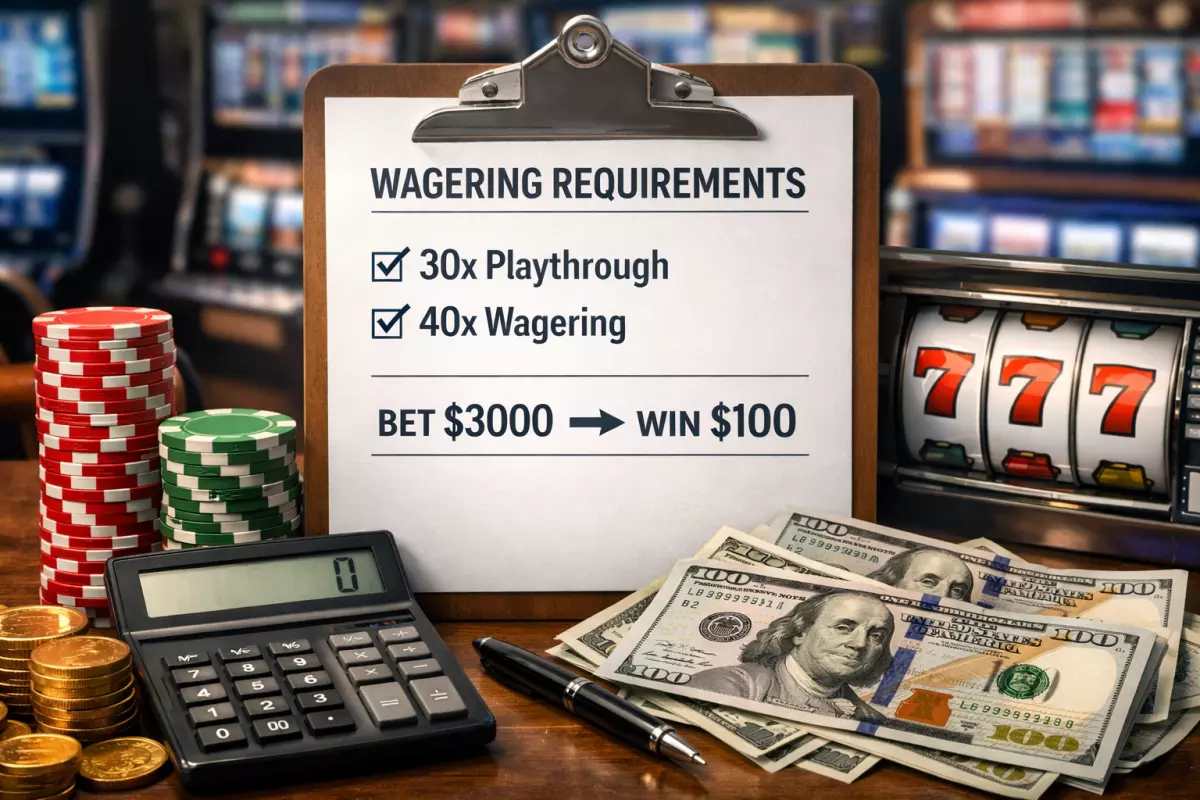
A playthrough rule is a condition attached to many casino bonuses that dictates how much you must bet before any bonus-related money (and sometimes the winnings from it) can be withdrawn. It’s essentially a “turnover target” set by the casino to make sure promotional funds are used for real gameplay rather than being cashed out immediately.
The requirement is usually shown as a multiplier, such as 30x or 40x. That number is applied to a specific base amount (for example, the bonus amount, the deposit amount, or a combination of both). Until you meet the required total wagered amount, your balance may be locked for withdrawal or limited to partial cash-out rules.
How the calculation typically works
The core idea is simple: you need to accumulate a certain amount of qualifying bets. If a bonus has a 35x playthrough on a $100 bonus, you’re expected to place $3,500 worth of eligible wagers before the casino treats the bonus funds as “cleared.” Importantly, this is about the total staked, not net losses or profits.
Casinos don’t all calculate it the same way. Some count only bets placed with bonus funds; others treat your balance as “mixed” and count wagers regardless of whether the stake came from cash or bonus. The terms will also specify whether canceled bets, voided rounds, or refunded stakes count (often they don’t).
What counts toward meeting the requirement
Not every game contributes equally. Slots commonly count 100% of each wager toward the target, while table games may contribute a reduced percentage or be excluded. This is why two players can wager the same amount and still progress differently depending on what they play.
| Game type | Typical contribution rate | Why it’s treated this way |
|---|---|---|
| Slots | Often 100% | Higher house edge and volatility make bonus abuse harder to guarantee. |
| Video poker | Commonly 10%–50% | Lower house edge on optimal play can reduce casino margin. |
| Blackjack / roulette / baccarat | Often 0%–20% (sometimes excluded) | Some strategies can lower variance or exploit promo conditions. |
| Live dealer games | Frequently 0%–10% | Lower edge and higher bet sizes increase risk of quick clearing. |
Common rules bundled with playthrough
Turnover targets rarely appear alone. Casinos often add constraints that affect how quickly you can clear a bonus and what you can withdraw at the end. These details matter because they can change the “real” value of an offer even when the headline multiplier looks reasonable.
- Max bet limits: a cap on stake size while the bonus is active (for example, $5 per spin/hand).
- Time limits: a deadline to complete the wagering (such as 7 or 30 days) before the bonus expires.
- Game restrictions: only certain titles or categories qualify, or some are excluded entirely.
- Withdrawal caps: a maximum cash-out from bonus winnings, especially on no-deposit promos.
- Sticky vs. non-sticky bonuses: sticky bonuses must be used (and lost) first; non-sticky bonuses allow withdrawals of deposited cash first in some setups.
In practice, these conditions determine whether a bonus is a small boost or a long grind that ties up your bankroll. Understanding the multiplier is only the first step; knowing the base amount, eligible games, and extra limits is what tells you how the requirement will affect your casino winnings.
How wagering affects bonus winnings

Wagering requirements determine how much you must bet before any bonus-related balance turns into withdrawable cash. The key impact is that your “profit” from a promotion is not just the bonus size, but the bonus size minus the expected cost of completing the playthrough (including losses, time, and any rule-based restrictions).
Why your withdrawable amount can be much smaller than the bonus
Most casino bonuses sit in a separate balance (or are tagged as bonus funds) until you meet the playthrough target. During that period, wins can look real on the screen, but they may be capped, restricted, or even removed if you breach terms. In practice, the requirement acts like a gate: you can win along the way, but you only “keep” it once the conditions are satisfied.
Even when you finish the wagering, what you withdraw may still be limited by rules such as maximum cashout, game weighting, or excluded games. That’s why two offers with the same headline amount can lead to very different final results.
What changes the real value of a bonus
The playthrough multiplier is the obvious factor, but it’s rarely the only one. The effective cost and difficulty depend on how the terms interact with your game choice and bankroll.
- Multiplier and base amount: Wagering can apply to the bonus only, the deposit only, or deposit + bonus. Deposit + bonus usually requires more total betting.
- Game contribution (weighting): Slots might count 100%, while table games may count 10%–20% or be excluded, meaning you need far more bets to make progress.
- Bet limits during wagering: If there’s a max stake rule, exceeding it can void winnings or reset progress, turning a good run into a non-withdrawable balance.
- Time limits: A short window increases the chance you’ll rush, raise stakes, or fail to complete the requirement at all.
- Maximum cashout caps: Some offers allow you to withdraw only up to a fixed amount, even if you win more while playing through.
How wagering shapes your expected profit (and risk)
Every bet has an expected loss based on the game’s house edge. When a bonus forces you to place a large total amount of bets, you’re exposed to that edge for longer. That doesn’t mean you can’t come out ahead; it means the promotion’s value depends on whether the bonus (and any allowed strategies) outweigh the expected cost of the required turnover.
Variance matters too. High-volatility games can produce big swings: you might hit a large win early and still fail the requirement later if the balance drains before completion. Lower-volatility options may stretch bankroll further, but if their contribution rate is reduced, you can end up needing more spins to reach the target.
Common bonus-winnings outcomes caused by wagering rules
| Rule or condition | Typical effect on bonus winnings | What to watch for |
|---|---|---|
| Wagering applies to deposit + bonus | Higher total turnover required, increasing time and risk of busting before completion | Check the exact formula used to calculate the playthrough target |
| Low game contribution (e.g., 10% on table games) | Progress is slow, so you may need far more betting than expected | Look for weighting by game category and any excluded titles |
| Maximum bet limit while wagering | Limits how quickly you can clear requirements; breaking it can void winnings | Confirm whether the limit is per spin/hand and whether it’s enforced retroactively |
| Maximum cashout cap | Even if you win big, withdrawal may be limited to a set amount | Compare the cap to the bonus size and your realistic win range |
| Short time limit to complete wagering | Increases the chance of failing the requirement, making winnings non-withdrawable | Check whether the timer starts at claim, deposit, or first bet |
Practical ways to protect your bonus winnings
Start by calculating the required turnover and deciding whether your bankroll can realistically survive the playthrough. If you’re close to the edge, a single downswing can wipe out the balance before you unlock withdrawals. It also helps to pick games that count fully toward wagering and to stay within any max stake rule, even when you’re up.
Finally, treat “bonus winnings” as conditional until you confirm two things: you can meet the requirement within the time limit, and there are no caps or restrictions that would reduce what you can actually cash out at the end.
Examples of wagering calculations

These scenarios show how playthrough is typically measured and how different rules can change what you need to bet before a bonus (and any related winnings) becomes withdrawable. For simplicity, the math below assumes the casino counts eligible bets at face value unless stated otherwise.
Example 1: Deposit match with a 35x bonus wagering requirement
Suppose you deposit $100 and receive a 100% match bonus of $100. If the terms say 35x wagering on the bonus amount, you must place $100 × 35 = $3,500 in eligible bets before you can cash out bonus-derived funds.
If the same offer instead requires 35x on deposit + bonus, the base becomes $200, so the wagering target is $200 × 35 = $7,000. The requirement looks similar on the surface, but the difference is substantial.
Example 2: Free spins converted to bonus funds
Imagine you receive free spins, win $18, and those winnings convert into a bonus balance. If the terms say 40x wagering on free spin winnings, you need $18 × 40 = $720 in qualifying bets.
Some casinos convert free spin winnings into “sticky” bonus credit (not withdrawable until conditions are met). Others convert them into cash but still apply a playthrough requirement. The calculation is the same, but what you can withdraw during the process may differ.
Example 3: Weighting by game contribution (slots vs. table games)
Game contribution rules can quietly extend the time it takes to clear playthrough. Assume you have a $100 bonus with a 30x bonus wagering requirement, so the target is $3,000. Now compare what happens if you bet on games that count differently.
| Where you place bets | Contribution rate | Total bets placed | Wagering credit earned | Bets needed to reach $3,000 credit |
|---|---|---|---|---|
| Slots only | 100% | $1,000 | $1,000 | $3,000 |
| Blackjack only | 10% | $1,000 | $100 | $30,000 |
| Roulette only | 20% | $1,000 | $200 | $15,000 |
| Half slots / half blackjack | 100% / 10% | $3,000 | $1,650 | About $5,455 total bets |
The key idea is that the casino tracks wagering credit, not just the amount you bet. If a game contributes 10%, then $10 in bets only reduces the remaining requirement by $1.
Example 4: Max bet limits while a bonus is active
Bet caps don’t change the required wagering total, but they can affect how quickly you can complete it and whether you accidentally violate the terms. Say your requirement is $4,000 and the maximum allowed bet is $5 per spin. Even if every bet counts 100%, you’d need $4,000 ÷ $5 = 800 spins to finish.
If you place a $10 spin while the cap is $5, some casinos may void the bonus and related winnings. In other words, the “calculation” can become irrelevant if a rule breach resets your eligibility.
Example 5: Wagering requirement plus a withdrawal cap
Some promotions add a maximum cashout. Suppose you get a $50 bonus with 40x wagering, so you must wager $2,000. During play you run it up and end with $600 profit after meeting the playthrough. If the terms include a max withdrawal of 5x the bonus, your maximum cashout is 5 × $50 = $250 (even though you technically cleared the wagering requirement).
This is why it helps to read both the playthrough math and the payout limits: one controls when you can withdraw, the other can control how much you can withdraw.
When you calculate wagering requirements, always confirm three inputs: what amount the multiplier applies to (bonus, deposit, or both), which games count and at what rate, and whether there are extra constraints like max bet rules or cashout caps.
Games that contribute to wagering

Most casinos don’t treat every bet the same when you’re trying to clear a wagering requirement. Each game is assigned a contribution rate (often shown in the bonus terms), and that percentage determines how much of your stake actually counts toward the playthrough target.
The practical takeaway is simple: two players can wager the same amount of money and make very different progress depending on what they play. A $100 bet on one title might add the full $100 to your requirement, while another might add only $10—or nothing at all.
Why contribution rates differ
Casinos typically set higher contribution on games with a higher house edge and higher variance, and lower contribution on games where the casino’s expected profit is smaller. That’s why low-edge table games often count less, and some side bets are excluded entirely.
Contribution can also vary by provider, game category, or even a specific title. Two “slots” can have different rules if one is classified as a jackpot game or a branded feature slot that the casino excludes from bonus play.
Typical contribution by game type (general guidance)
Exact percentages depend on the casino, but the ranges below reflect what players commonly see in wagering terms. Always confirm the specific rate in your bonus conditions before committing to a strategy.
| Game type | Common contribution to wagering | Notes that often affect eligibility |
|---|---|---|
| Slots (standard video slots) | High (often 100%) | Some “bonus buy” features, branded titles, or certain providers may be restricted. |
| Jackpot slots | Low to none (often 0–20%) | Frequently excluded to prevent bonus funds being used on progressive jackpots. |
| Roulette | Low (often 0–20%) | Some casinos exclude specific bet types (for example, covering many numbers at once). |
| Blackjack | Low (often 0–10%) | Side bets may count differently or not at all; “strategy-friendly” variants are often restricted. |
| Baccarat | Low (often 0–10%) | Tie bets and side bets are commonly excluded or reduced. |
| Video poker | Low to none (often 0–10%) | Frequently limited because optimal play can reduce the house edge significantly. |
| Live casino tables | Low to none (often 0–10%) | Higher minimum bets can also make clearing requirements harder without breaching max-bet rules. |
| Specialty games (crash, dice, keno, scratch cards) | Varies widely (often 0–100%) | These categories are the most inconsistent; some count fully, others are excluded entirely. |
Common “counts less” or “doesn’t count” situations
Even within an eligible category, certain actions can reduce how much wagering credit you receive. Casinos do this to limit low-risk play patterns that can convert bonus money into withdrawable cash too efficiently.
- Excluded titles: specific games listed in the terms may contribute 0%, even if they look like normal slots.
- Side bets and special markets: optional bets in table games are often excluded or treated differently from the main wager.
- Low-risk coverage betting: strategies that cover many outcomes (for example, large roulette coverage) may be restricted or flagged.
- Bonus buy / feature purchase: paying to trigger a bonus round can be disallowed or may not count toward playthrough.
How to choose games when clearing wagering
Start by checking three items in the bonus terms: the contribution rate by game, the maximum bet allowed while the bonus is active, and any excluded providers/titles. Those rules matter as much as the headline wagering multiple.
If your goal is to maximize progress, games that count 100% will move the requirement faster per dollar wagered. If your goal is to protect bankroll, you’ll also want to consider volatility and bet sizing so you don’t run out of funds before meeting the playthrough target.
Maximum bet rules during wagering

Bet caps are one of the most common “gotchas” in bonus terms: you may be allowed to place any stake with your own money, but once a promotion is active, the casino can limit how much you’re permitted to wager per spin or hand. The purpose is simple: stop players from clearing wagering requirements too quickly or from using high-variance bets to “spike” a big win and then cash out.
If you exceed the stated limit, the usual outcomes range from a warning to partial confiscation of winnings, and in stricter cases, voiding bonus-related profits entirely. Because the penalty can be disproportionate to the mistake, it’s worth treating the maximum stake as a hard rule, not a guideline.
What counts as your “bet” for the limit
The maximum is typically defined per game round (one slot spin, one blackjack hand, one roulette spin). Some operators apply it to the total stake including side bets, while others apply it only to the base wager. When the rule is vague, assume the stricter interpretation: base bet plus any optional add-ons.
Also watch for games that let you increase exposure without changing the visible stake (for example, buying features, extra chances, or multi-level side bets). These can be treated as exceeding the cap even if the main bet line looks compliant.
Why casinos enforce it during wagering
A wagering requirement is designed to create a certain amount of play-through. Large stakes can reduce the number of rounds needed to finish, and high-volatility strategies can turn the bonus into a quick “all-or-nothing” attempt. Maximum bet restrictions are meant to keep the play pattern closer to normal recreational betting and to limit advantage-seeking behavior.
From a practical standpoint, it also makes bonus outcomes more predictable for the casino: more rounds at smaller stakes generally smooth out variance compared with fewer rounds at larger stakes.
Common cap structures you’ll see
Limits are not always a single flat number. Some casinos set different ceilings depending on the game type, bonus type, or account currency. Here are typical structures players run into:
- Flat per-round cap (e.g., “max $5 per spin/hand”).
- Game-specific caps (slots one limit, table games another, sometimes table games excluded entirely).
- Tiered caps that change after a win threshold or after a portion of wagering is completed.
- Cap tied to bonus size (for example, a maximum bet equal to a small percentage of the bonus amount).
How breaking the limit can affect your winnings
Consequences vary by operator, but they usually fall into a few patterns. The strictest terms allow the casino to remove bonus funds and any winnings derived from them if you place even one wager above the maximum. More moderate rules may only void the rounds that exceeded the cap or reduce the cashout to a set maximum.
It’s also common for customer support to rely on the written terms rather than intent. Even if the over-bet was accidental, the system logs the stake, and the operator may treat it as a breach of bonus conditions.
Practical ways to stay compliant
The easiest approach is to set your stake comfortably below the ceiling so a misclick or a change in coin size doesn’t push you over. If the cap is $5, playing at $4 or $4.50 gives you a buffer.
Before you start, check three places: the bonus pop-up in the cashier, the promotion’s terms, and any in-game betting panel notes. If the casino offers a “bonus mode” indicator, keep it visible so you don’t forget the restriction is active.
Finally, be careful when switching games. A stake that is under the limit on one slot can become an over-limit wager on another if the minimum coin value or default bet configuration changes. When in doubt, reset to the minimum bet and increase slowly while confirming the displayed total stake stays under the allowed maximum.
Common restrictions while wagering
Bonus play is rarely “bet anything you want.” Most casinos attach conditions that limit which games count, how much you can stake per spin or hand, and what happens if you win big before meeting the playthrough. Knowing these limits upfront helps you avoid accidental rule breaks that can reduce or void your casino winnings.
Game contribution limits
Not every game contributes equally toward meeting wagering requirements. Slots often count at 100%, while table games may count partially (or not at all) because their house edge is typically lower. Some variants can be excluded entirely, especially low-volatility or low-edge options.
If you switch between games, track whether your stake is actually moving the requirement down. A common surprise is that a long blackjack session may add little progress, even if you wagered a lot.
Maximum bet rules during bonus play
Many promotions set a cap on the size of each wager while a bonus is active. The goal is to prevent players from using a few oversized bets to clear playthrough quickly. If you exceed the cap, the casino may confiscate bonus funds, remove winnings, or reset the bonus.
- Per-spin or per-hand maximums (including side bets in some cases)
- Limits that apply only when using bonus funds, not after conversion to cash
- Different caps for slots versus live dealer or table games
Excluded bets and features
Restrictions often extend beyond the base stake. Side bets, bonus buys, feature purchases, and certain in-game options may be excluded from wagering calculations or treated differently. This matters because these add-ons can inflate your total betting without reducing the remaining playthrough.
In some cases, using a prohibited feature is treated the same as breaking a max bet rule, even if your base wager was within limits.
Time limits and expiry windows
Wagering requirements usually come with a deadline. If you don’t complete the playthrough within the stated period, the bonus and any associated winnings can expire. Time limits can be especially strict on free spins or short-term reload offers.
Also watch for “activation” rules: some bonuses start counting down the moment you claim them, while others begin when you place the first qualifying bet.
Withdrawal and cashout restrictions
Some bonuses impose a maximum cashout, meaning your withdrawable winnings are capped even if you exceed the wagering requirement. Others restrict withdrawals until you finish the playthrough, and attempting to cash out early may forfeit the bonus balance.
It’s also common to see rules about minimum withdrawal amounts or required verification steps before a payout is processed, which can affect how quickly you can access your casino winnings.
Country, payment method, and account eligibility limits
Promotions can be limited by region, currency, or payment method. Certain deposit options may be excluded from qualifying for a bonus, and some casinos apply different wagering requirements depending on how you funded your account.
Account-level rules matter too: one bonus per person, per household, or per IP address is a frequent condition. If the casino flags duplicate accounts, it may cancel the offer and any winnings tied to it.
| Restriction type | What it usually controls | Why it affects your outcome |
|---|---|---|
| Game contribution | Which games count and at what percentage | You may wager a lot without making meaningful progress toward clearing the requirement |
| Max bet cap | Largest allowed stake per spin/hand (sometimes including side bets) | Going over the limit can void bonus winnings or trigger bonus removal |
| Excluded features | Bonus buys, side bets, specific game modes | Extra spending may not count, slowing completion and increasing variance |
| Expiry deadline | Time window to complete playthrough | Failing to finish in time can forfeit the bonus and related winnings |
| Cashout limits | Maximum withdrawable amount from bonus play | Even after meeting wagering, you might not be able to withdraw the full balance |
| Eligibility rules | Region, payment methods, duplicate account checks | Non-qualifying deposits or account flags can cancel the promotion and winnings |
Before you start, it helps to skim the bonus terms for the specific deal you claimed and then play in a way that stays within the limits. Most issues come from small details: a single oversized bet, a prohibited side wager, or choosing games that barely contribute to the wagering requirement.
How casinos track wagering progress
Casinos measure bonus playthrough by logging eligible bets and subtracting them from the remaining requirement in your account. The numbers you see in a “wagering meter” are usually calculated automatically from your bet history, filtered through the promotion’s rules (game contribution, max bet limits, excluded bets, and time windows).
What data the casino records from each bet
Every spin or hand creates a transaction record tied to your player ID. Beyond the stake amount, the system typically stores the game ID, timestamp, device/channel, currency, and whether the wager was made with cash, bonus funds, or a mix. This matters because many offers count only certain balances or only the “real money” portion of a mixed bet.
The platform then applies the promotion logic to decide what portion of that wager counts toward the requirement. If a game has reduced contribution (for example, some table games), the casino credits only a fraction of the stake to your progress.
How “eligible wagering” is calculated
Progress usually increases based on qualifying turnover, not on wins or losses. In plain terms, the system asks: “How much did you bet on allowed games, within allowed limits, during the promo period?” It then adjusts for contribution rates and excluded bet types.
- Game contribution: Slots might count 100%, while other categories may count less or not at all.
- Maximum bet rules: If you exceed the cap, the bet may be excluded or flagged for review.
- Excluded features: Some promotions ignore bonus buys, side bets, or certain roulette outcomes.
- Balance source: Bets made with bonus funds may be treated differently from cash stakes.
Why your tracker can look “wrong”
Most discrepancies come from timing and rule filters, not from missing bets. Many systems update the wagering counter in batches, so your progress can lag behind your actual play for a few minutes (sometimes longer during maintenance or high traffic).
Another common cause is playing a game with partial contribution or an excluded mechanic. You may bet $10, but only $2 (or $0) is credited toward the playthrough, which makes the meter move slower than expected.
Typical reasons progress is reduced or paused
| What you do | How it affects wagering progress | Why the casino does it |
|---|---|---|
| Play low- or zero-contribution games | Only part of the stake (or none) counts | To prevent low-risk play from clearing requirements too easily |
| Exceed the promotion’s max bet | Bet may be excluded, progress may be adjusted, or winnings may be restricted | To enforce consistent risk levels during bonus use |
| Use excluded bet types (side bets, bonus buys, specific outcomes) | Wager may not count at all | To limit strategies that reduce variance or exploit payout structures |
| Switch between cash and bonus balances mid-session | Only the qualifying portion is credited; tracking can appear inconsistent | Because different balance sources can have different playthrough rules |
Where to verify the numbers
If the progress bar doesn’t match your expectations, check the promotion terms first (especially contribution by game category and max bet). Then compare the wagering meter with your transaction history: look for the exact games played, the stake sizes, and whether you used features that might be excluded. If something still doesn’t add up, support can usually confirm which wagers were counted and which were filtered out.
Tips for managing wagering requirements
Start by treating the playthrough rule like a cost you can measure, not a vague condition. Before you accept any bonus, calculate how much you must stake, how long it could take at your usual bet size, and whether the eligible games match how you actually play.
Read the terms that change the math
Small details often decide whether a promotion is worth it. Focus on the parts that affect how quickly wagering is completed and how much of your play counts toward it.
- What counts toward wagering: bonus amount only, deposit + bonus, or winnings as well.
- Game contribution rates: slots may count 100%, while table games might count 10%–20% or be excluded.
- Max bet while bonus is active: exceeding it can void winnings or remove the bonus.
- Time limits: deadlines can force rushed play and bigger mistakes.
- Win caps and cashout limits: some offers limit how much you can withdraw from bonus-derived winnings.
Pick games that help you finish with less risk
If multiple games contribute, prioritize those that count fully and fit your risk tolerance. A high contribution rate matters, but so does volatility: highly volatile slots can swing your balance hard, making it easier to bust before you complete the requirement. Lower volatility options can keep you in the game longer, even if the pace feels slower.
When table games contribute at a reduced rate, they can become inefficient for clearing playthrough. For example, a game contributing 10% means you need ten times the wagering to make the same progress, which can quietly inflate the true requirement.
Control bet sizing to avoid common violations
Set a bet size that keeps you comfortably under any maximum-bet rule and gives your bankroll room to absorb variance. A simple approach is to choose a flat bet you can repeat for many rounds rather than chasing losses with sudden increases, which can both increase risk and accidentally breach limits.
Also watch side bets and bonus features: some casinos treat them differently for wagering contribution, and they can raise your average stake without you noticing.
Track progress like a checklist
Don’t rely on memory. Keep a quick note of your starting balance, current balance, and remaining wagering. If the casino shows a progress meter, use it, but verify it occasionally against your own rough math so you notice discrepancies early.
| Term to check | Why it matters | Practical move |
|---|---|---|
| Wagering basis (bonus vs. deposit+bonus) | Determines the total amount you must stake | Compute required wagering before opting in |
| Game contribution percentages | Changes how fast your bets reduce the requirement | Favor higher-contribution games you can play steadily |
| Maximum bet rule | Breaking it can void winnings or cancel the bonus | Set a flat stake below the cap and stick to it |
| Time limit | Forces faster play and increases the chance of mistakes | Only accept offers you can complete at your normal pace |
| Excluded games and side bets | You may wager without making progress | Avoid excluded titles and check side-bet treatment |
Know when to skip a bonus
Sometimes the best strategy is not taking the offer. If the requirement is high, the time window is short, or your preferred games contribute poorly, you may end up staking far more than you intended just to unlock a withdrawal. Skipping can protect your bankroll and keep your play aligned with your budget.
As a final check, ask yourself one question: if the bonus disappeared right now, would you still be happy with the games and bet sizes you’re using? If the answer is no, the wagering condition is driving your decisions more than your own plan.