How Slot Paylines Work: Full Guide for Beginners

 Explains what slot paylines are, how they form winning combos, and common patterns. Covers fixed vs adjustable lines, typical line counts, how lines change bet size and payouts, paylines vs ways-to-win, reading paytables/diagrams, layout examples, picking slots, mistakes, and an FAQ.
- What slot paylines are and why they matter
- How paylines determine winning combinations
- Common payline patterns in modern slot machines
- Fixed paylines vs adjustable paylines
- How many paylines a slot can have
- How paylines affect bet size and payouts
- Paylines vs ways to win systems
- How to read slot paytables and line diagrams
- Examples of popular payline layouts
- Strategies for choosing slots with different paylines
- Common mistakes players make with paylines
- FAQ about slot paylines
Learning how slot paylines and line patterns work helps you avoid wasting spins and pick games that match your budget. This guide explains what a payline is, how fixed and adjustable lines change your total stake, and how winning combinations are counted, so you can read the screen accurately, choose sensible bet settings, and play with more control and confidence.
What slot paylines are and why they matter
A payline is the route a slot uses to read symbols and decide whether a spin is a winner. Think of it as an invisible line (or pattern) across the reels: when the required symbols land on the right positions along that path, the game pays according to its paytable. Without these lines or patterns, the machine would have no consistent rule for turning a reel stop into a payout.
Paylines matter because they shape how often you can hit a winning combination, what kinds of wins are possible, and how your bet is distributed across the game. Two slots can show the same symbols and still feel completely different if one uses a few straight lines and the other uses dozens of zigzags, diagonals, or “ways” style connections.
Paylines vs. reels vs. paytable: what each one does
Beginners often mix these up, so it helps to separate their jobs:
- Reels are the vertical columns that stop on symbols (e.g., 5 reels, 3 rows).
- Paylines are the specific symbol paths the game checks for wins on each spin.
- Paytable tells you how much each symbol combination pays when it lands on a valid line (or valid “way”).
How a payline creates a win (the basic rule)
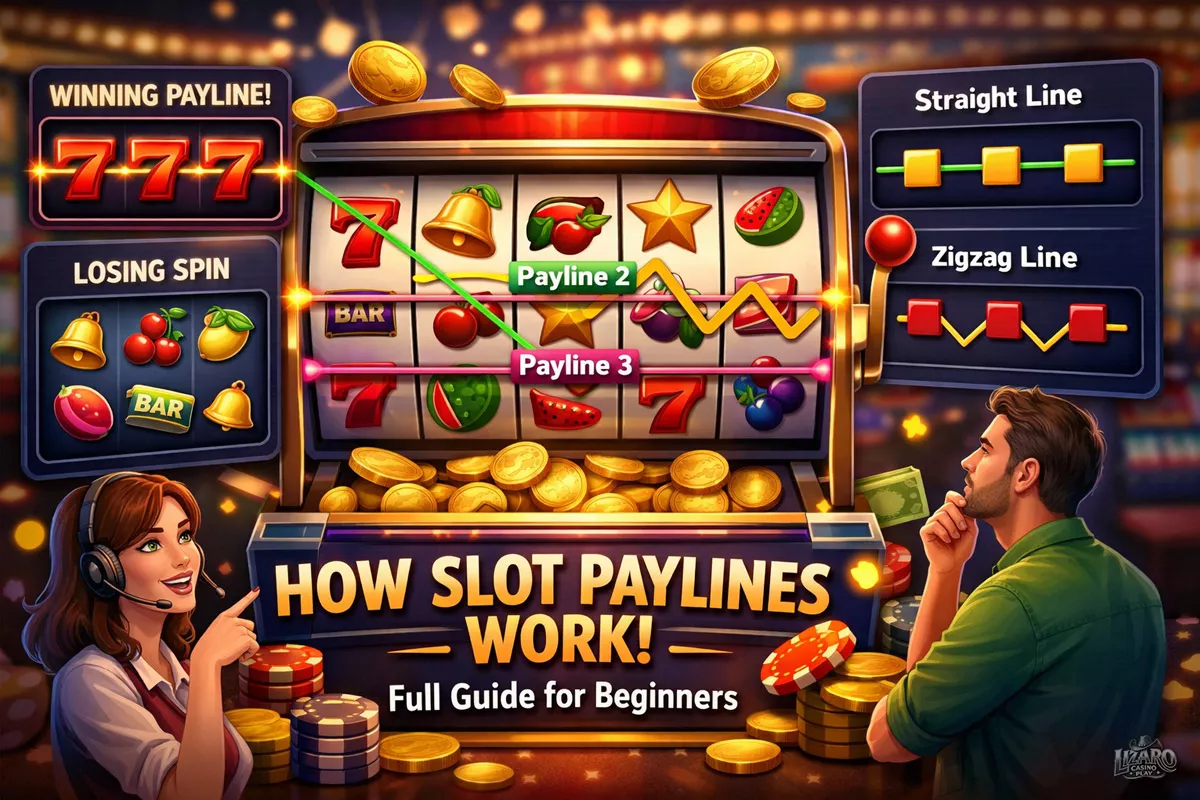
Most classic line-based slots pay when matching symbols land on adjacent reels along an active line. In many games, the match must start from the leftmost reel and continue to the right, although some slots also allow right-to-left wins or “both ways” wins. The exact direction rule is always defined in the game info.
Just as important: symbols that look like they “match” can still pay nothing if they are not aligned on an enabled line. That’s why two identical reel screens can produce different results depending on which lines are active.
Why the number and shape of paylines change the feel of a slot
More lines usually means the game checks more patterns every spin, so you tend to see more frequent small wins (or near-wins) compared with a slot that only pays on a few straight lines. Fewer lines can feel swingier: you may go longer between payouts, but individual hits can stand out more because your stake isn’t spread across many lines.
Line shape matters too. Straight horizontal lines are easy to read, while zigzag and diagonal patterns can create wins that look less obvious until you understand the path. Modern video slots often use complex line maps, which is why the “paylines” screen is worth opening before you play.
Active paylines and your bet size
On many slots, you can choose how many paylines to activate and how much to bet per line. This affects both your total stake and how the game evaluates wins:
- If you reduce the number of active lines, you lower your total bet, but you also reduce the number of patterns that can pay on that spin.
- If you keep all lines active and adjust the coin size (or line bet), you keep the same coverage while changing the overall stake.
Some newer games don’t let you select line count at all; instead, they use fixed paylines or a “ways to win” system where every reel position can help form a payout. Either way, the core idea is the same: the slot needs a defined method for checking symbol connections and awarding wins.
Common payline setups you’ll run into
| Setup | How wins are checked | What it typically feels like |
|---|---|---|
| Single payline (classic) | One straight line, usually the middle row | Simple to follow, but fewer chances per spin |
| Fixed multiple paylines | A set number of lines is always active | Consistent coverage; you mainly adjust total bet via stake size |
| Selectable paylines | You choose how many lines are active | Flexible budgeting, but fewer active lines means more “missed” wins |
| “Ways to win” (all-ways) | Matches connect across adjacent reels without fixed line paths | Lots of small connections; reading wins relies on the rules display |
Once you understand what the game counts as a valid line (or valid connection), the rest of the slot’s behavior becomes easier to predict: why some spins pay, why others don’t, and how changing your stake changes what you’re actually buying each spin.
How paylines determine winning combinations

A slot only pays when the symbols land in a pattern the game recognizes as “on a line.” That pattern is defined by the payline map (the routes across the reels) and the paytable (which symbols and counts are rewarded). If your reels show matching icons but they don’t align along an active line in the required direction, the spin usually won’t count as a win.
What a payline actually “reads” on the reels
Think of each payline as a fixed path that touches one symbol position on every reel. On a 5-reel slot, a single line typically checks 5 positions (one per reel). Straight lines might follow the middle row, while zigzags jump between top, middle, and bottom positions as they move left to right.
When the reels stop, the game evaluates each enabled line independently. A winning combination is found when the symbols along that path match the paytable requirements, such as “3 or more” of a symbol, or a special mix involving wilds.
Direction matters: left-to-right, right-to-left, or both
Many classic slots pay left-to-right only, meaning the match must start on the leftmost reel and continue consecutively. Some games also allow right-to-left wins, and a smaller set pays both ways. This rule changes whether a cluster of matching symbols is considered valid if it begins on reel 2 or reel 5.
- Left-to-right: the first symbol in the winning run must appear on reel 1.
- Right-to-left: the first symbol in the winning run must appear on reel 5.
- Both ways: either side can be the starting point, depending on the game’s rules.
How many matching symbols are needed
The paytable sets the minimum length of a win on a line, commonly 3, 4, or 5 of a kind on 5-reel slots. The key detail is that the matching symbols must be consecutive along that payline path (unless the game explicitly supports non-adjacent wins, which is less common for standard paylines).
Example: if a line shows Cherry–Cherry–Cherry–Lemon–Cherry, that is usually a 3-of-a-kind (first three reels) rather than a 4-of-a-kind, because the sequence breaks on reel 4.
Wild symbols and substitutions on a line
Wilds typically substitute for other symbols to help complete a winning run along a payline. They don’t always replace every symbol, though—many games restrict wilds from substituting for scatters or bonus icons. Also, some wilds come with multipliers, which can increase the payout for that specific line win.
One common rule: if multiple interpretations are possible (for example, a wild could complete either a high-paying symbol or a low-paying one), the game generally awards the highest-value valid combination on that line.
Why “matching symbols on the screen” can still pay nothing
Beginners often assume any visible group of identical symbols is a win. With paylines, visibility isn’t enough: the match must sit on an active line and meet the game’s direction and consecutiveness rules. If you’re playing fewer lines than the slot offers, symbols can align on an inactive route and be ignored.
Quick example: same reels, different outcomes depending on active lines
| What lands on the reels | Payline setup | Does it count as a win? | Why |
|---|---|---|---|
| Three “A” symbols across the middle row on reels 1–3 | Middle horizontal line active | Yes | The symbols are consecutive on an enabled line in the correct direction. |
| Three “A” symbols across the top row on reels 1–3 | Only middle line active | No | The match is on a different route that isn’t being played. |
| “A–A–Wild” on a zigzag line across reels 1–3 | Zigzag line active | Yes | The wild substitutes to complete a 3-of-a-kind on that payline. |
| Two “A” symbols on reels 2–3, plus an “A” on reel 5 | Left-to-right pays only | No | The run doesn’t start on reel 1 and isn’t consecutive. |
If you want to judge a spin correctly, check three things in order: which lines are active, which direction the slot pays, and whether the matching symbols form an unbroken run along the line path. Once those rules click, paylines stop feeling random and start feeling readable.
Common payline patterns in modern slot machines
Most video slots don’t rely on a single straight line anymore. Instead, they use a set of predefined routes across the reels that tell the game which symbol combinations count as wins. The layout can look simple on the screen, but the underlying paths can include diagonals, zigzags, and stacked line shapes.
Straight lines (horizontal paylines)
The easiest routes to understand are the horizontal ones. A classic 3-reel slot often has one payline straight across the center, while a 5-reel video slot may include top, middle, and bottom lines. These are usually the first paylines shown in the paytable because they’re the most intuitive to read during play.
Diagonal paylines
Diagonal patterns connect symbols from one corner of the grid to the opposite corner, such as top-left to bottom-right. They add more ways to win without changing the reel layout, and they’re common in 5x3 games that offer 10, 20, or 25 fixed paylines.
Zigzag and “V/W” shaped patterns
Many modern machines include paylines that bend up and down across the reels. These routes often form shapes like a shallow V, an inverted V, or a W. They can feel busy at first, but the idea is simple: the payline is just a specific sequence of symbol positions that the game checks after each spin.
Box and “frame” patterns
Some paylines trace the edges of a small rectangle or “box” within the reels (for example, using the top and bottom rows with a middle connection). These patterns are used to increase combination variety, especially in 5x3 grids where designers want more unique line routes without expanding to taller reels.
Multi-row crossings and dense payline maps
On 5x3 slots with 50, 100, or more fixed paylines, you’ll often see lines that cross each other frequently. This doesn’t mean the game is doing anything unusual; it simply means there are many distinct paths being evaluated at once. In practice, the winning line is typically highlighted after the spin so you can see exactly which route produced the payout.
| Pattern type | What it looks like on a 5x3 grid | Why it’s used | What to watch for |
|---|---|---|---|
| Straight (horizontal) | Top, middle, or bottom row across | Easy readability; classic feel | Check whether wins pay left-to-right only or both ways |
| Diagonal | Corner-to-corner slant | Adds variety without extra rows | Diagonals can be missed if win highlights are fast |
| Zigzag (V/W) | Up-down path across reels | Creates more unique combinations | Confirm which row positions belong to each line |
| Box / frame | Rectangle-like outline using multiple rows | Increases win routes while keeping the same grid | Some boxes overlap heavily with other lines |
| Dense “crossing” maps | Many lines intersecting in the same reel positions | Supports high payline counts (50+) | More active lines usually means a higher total bet per spin |
Fixed paylines vs. adjustable paylines (how patterns affect your bet)
Pattern variety matters because it changes how your stake is distributed. With fixed paylines, every line is always active, so you’re paying for the full set of routes each spin. With adjustable paylines, you can choose fewer active lines, which reduces the total bet but also reduces the number of winning paths being checked.
How to read a payline map quickly
- Open the paytable and find the “Paylines” screen; it shows numbered paths across the reels.
- Match the line number shown in a win highlight to the same number in the payline map.
- Check the direction rule (left-to-right, right-to-left, or both) because it changes what counts as a valid line win.
- Note whether the game pays for “ways” instead of lines; in that case, the line map is less important than reel-by-reel matching.
Fixed paylines vs adjustable paylines
Some slots lock the number of lines you play; others let you choose. That single design choice changes how you place bets, how often you hit small wins, and how quickly your balance can swing. It does not change the underlying randomness of each spin, but it does change how many “ways” a result can become a payout.
What “fixed” means in practice
With a fixed line setup, the game always evaluates the same set of lines on every spin. You typically can’t reduce the number of active lines, so the only meaningful bet control is your stake per line (or an overall coin value). This keeps things simple: every spin checks the full payline map, and any winning combinations on those lines are counted.
Because all lines are always on, you’ll usually see more frequent small payouts compared with playing fewer lines on an adjustable game at the same total cost per spin. The trade-off is that you can’t “dial down” the cost by turning lines off; you can only lower the stake size.
What “adjustable” means in practice
With adjustable paylines, you choose how many lines are active (for example, 1, 5, 10, 20, up to the maximum). The slot will only pay for winning combinations that land on the lines you’ve enabled. This gives you more control over your spend per spin, but it also introduces a common beginner mistake: landing a winning pattern on a line you didn’t activate and getting no payout.
When you play fewer lines, you’re effectively narrowing the set of outcomes that can pay on a given spin. That can reduce the hit rate, even if the game’s symbols and paytable are unchanged.
Key differences at a glance
| What you control | Fixed line slots | Adjustable line slots |
|---|---|---|
| Number of active paylines | Locked to the game’s set (always on) | You can increase or decrease lines (up to the max) |
| Cost per spin | Changes mainly by stake size | Changes by stake size and by how many lines you enable |
| Chance of “missed” line wins | Low (all lines are checked) | Higher if you play fewer lines than the maximum |
| Typical feel of results | Steadier stream of small line hits | Can feel swingier when fewer lines are active |
| Best for | Players who want simplicity and consistent evaluation | Players who want flexible staking and line selection |
How to choose as a beginner
Pick the format that matches how you want to manage your bet. If you prefer fewer settings and don’t want to worry about whether a payline is turned on, a fixed-line game removes that decision. If you want to fine-tune your cost per spin beyond just changing coin value, adjustable lines give you that flexibility.
- If you use adjustable lines, consider playing the maximum number of lines at a smaller stake to avoid “inactive line” frustrations.
- If you use fixed lines, treat the stake size as your main risk lever and adjust it to keep spins affordable.
- In both cases, remember that paylines only determine where wins are counted, not whether a spin is “due” to win.
Whichever type you choose, the most important habit is knowing what your current configuration is: how many paylines are active (if adjustable) and what your total bet per spin is. That alone prevents most beginner confusion about why a result did or didn’t pay.
How many paylines a slot can have
The number of winning lines on a slot can range from a single line to hundreds, and in some games even thousands of ways to win. This isn’t just a cosmetic detail: it affects how often you’re likely to see a payout, how your bet is distributed, and how “busy” the results feel from spin to spin.
Typical ranges you’ll see
Most modern video slots sit in the middle: more than a few lines, but not an extreme amount. Classic-style games often keep it simple, while newer titles may offer large line counts or replace fixed lines with alternative systems.
- 1–5 lines: common in classic 3-reel formats; wins are less frequent but easier to track.
- 10–25 lines: a very common range for straightforward video slots.
- 30–50 lines: frequent in feature-heavy games; many possible line routes.
- 100+ lines: usually paired with smaller per-line stakes and lots of small hits.
Fixed paylines vs. adjustable paylines
Some slots lock the line count, so every spin always uses all available paylines. Others let you choose how many lines to activate. That choice changes two things at once: the coverage of the reel grid (more lines means more symbol paths can qualify) and how much of your total bet is spread across those lines.
If a game allows adjustment, reducing active lines typically lowers the chance of landing a qualifying combination, even if your total stake stays similar. Increasing active lines generally increases hit frequency, but it can also mean each individual line is funded with a smaller slice of your wager unless you raise the total bet.
How line count interacts with your bet
On paylines-based slots, the total wager is often calculated as:
Total bet = number of active paylines × bet per line
That means two players can wager the same total amount in different ways: one might play fewer lines with a higher bet per line, while another plays many lines with a lower bet per line. The first approach tends to produce fewer but potentially larger line wins; the second tends to produce more frequent, smaller line wins. Neither is automatically “better” because outcomes are still governed by the game’s math model, but the experience can feel very different.
Paylines vs. “ways to win” systems
Not every slot uses traditional fixed lines. Many newer games use a ways mechanic (sometimes called all-ways or Megaways-style structures). Instead of counting paylines, these games count combinations across adjacent reels, often requiring matching symbols from left to right. In practice, this can create a very high number of possible winning routes without drawing explicit line patterns on the screen.
When you’re comparing games, it helps to note whether the rules mention paylines (specific paths) or ways (combinational routes). They can both produce frequent wins, but they describe different underlying win-check methods.
Quick comparison of common setups
| Setup | Typical line/ways count | What it tends to feel like | Betting implication |
|---|---|---|---|
| Classic 3-reel | 1–5 paylines | Simple outcomes, fewer line evaluations | Often higher stake per line if you want bigger single-line wins |
| Standard video slot | 10–25 paylines | Balanced mix of small wins and dry spells | Total bet commonly scales with active lines |
| Feature-heavy video slot | 30–50 paylines | More frequent “something happened” spins | Per-line stake may be smaller unless you increase total bet |
| All-ways / variable-ways | Hundreds to thousands of ways | Many combination checks, lots of small hits possible | Stake is usually per spin (not per line), with rules defining how wins stack |
What to check before you spin
The most reliable place to confirm the count is the game’s paytable or info screen. Look for the stated number of paylines (or ways), whether all lines are always active, and how the total bet is calculated. Those three details tell you more about how the game will behave than the line number alone.
How paylines affect bet size and payouts
Your total stake on a slot is usually built from two parts: the number of active lines and the amount you wager per line. The more lines you play, the more combinations you’re paying to evaluate each spin. That doesn’t automatically mean you’ll win more often or make more profit, but it does change how frequently you can land any paying pattern and how your bankroll moves from spin to spin.
Total bet: lines multiplied by coin value
On many classic and video slots, the math is straightforward: total bet equals active paylines × bet per line. If the game lets you choose fewer lines, lowering the line count reduces the cost per spin. If the game uses “all ways” (like 243 or 1024 ways), you typically can’t turn ways off, so the equivalent of “line count” is fixed and your only lever is the stake size.
Some modern games show a single “bet” slider and hide the per-line calculation. Under the hood, the same idea still applies: your stake is being distributed across the game’s active win routes.
How payouts scale with paylines
Paytables usually quote wins in one of two ways, and it matters for how paylines influence the payout:
- Per-line pay: the listed prize applies to one payline. If you’re betting more per line, the win scales up proportionally.
- Total-bet pay: the listed prize is based on your overall stake. Here, changing line count (if allowed) can change how much is allocated to each line/route, but the game may present wins as a multiple of the total wager.
In both cases, playing more lines tends to increase the chance that some line will connect on a given spin, because you’re simply checking more patterns. The trade-off is that you’re paying more for that coverage.
What changes when you add or remove paylines
Adjusting line count mainly affects volatility in the short term and how “busy” the game feels. With fewer active lines, you may see more spins where nothing pays, but each line you do play can be staked higher for the same total budget. With more lines, you may hit smaller line wins more often, but each individual line is typically funded with a smaller slice of your bankroll if you keep the same total bet.
| Player choice | What happens to cost per spin | What happens to hit frequency | Typical effect on win size distribution |
|---|---|---|---|
| Increase active paylines (same bet per line) | Total bet increases | More chances to connect a paying pattern | More small-to-medium line wins; bankroll swings can speed up because you’re staking more |
| Decrease active paylines (same bet per line) | Total bet decreases | Fewer patterns evaluated per spin | More non-paying spins; occasional wins may feel “cleaner” but happen less often |
| Increase paylines but keep total bet the same (if the game allows) | Total bet stays similar; bet per line drops | More lines can pay, but each line is funded less | More frequent small payouts; big single-line hits shrink because each line stake is lower |
| Fewer paylines but keep total bet the same (if the game allows) | Total bet stays similar; bet per line rises | Fewer ways to win on each spin | Less frequent wins, but when a line hits it can pay more because the line stake is higher |
Quick example (to make the math concrete)
Imagine a slot where you can choose 10, 20, or 30 paylines and you set a $0.05 bet per line. Your spin cost would be $0.50, $1.00, or $1.50. If the paytable lists “3 cherries = 10× line bet,” then a 3-cherry hit on one payline would pay $0.50 (10 × $0.05) regardless of whether you played 10 or 30 lines. The difference is simply that with more active lines, you gave yourself more opportunities for that cherry pattern to appear on a paying route.
Do more paylines increase RTP?
Not necessarily. The return-to-player is set by the game design, and many slots keep RTP roughly the same across bet sizes. What paylines change is how your stake is distributed and how often you’ll see line wins versus dead spins. If a slot lets you disable lines, it’s worth checking whether the paytable notes any changes to payout rules when fewer lines are active.
Paylines vs ways to win systems
Two common slot layouts decide how matching symbols turn into payouts: fixed lines that trace specific paths across the reels, and “all ways” mechanics that count symbol groupings across adjacent reels. They can look similar on the screen, but they behave differently when it comes to how often you hit, how wins are counted, and how your bet is distributed.
What a payline setup means in practice
A payline is a predefined route across the reels (straight, zig-zag, V-shape, and so on). A spin pays when the right symbols land on an active line in the required order, usually starting from the leftmost reel. If a line isn’t active, a matching pattern on that path won’t count, even if it’s visible.
Many modern games activate all lines by default, but you’ll still see the line count in the info panel. In older or “classic” formats, you could sometimes choose fewer lines, which reduced the total bet and also reduced how many patterns could qualify.
How “ways” (all-ways) systems work
In a ways-to-win game, there are no drawn lines to follow. Instead, you win when matching symbols appear on adjacent reels, typically from left to right. Each reel can contribute multiple matching positions, and the game multiplies those combinations into “ways.”
For example, if you have 3 of the same symbol on reel 1, 2 on reel 2, and 1 on reel 3, that can form 3 × 2 × 1 = 6 winning combinations for that symbol length (assuming the game counts all positions and the symbol is eligible).
Key differences that affect your results
| Feature | Paylines | Ways to win |
|---|---|---|
| How a win is formed | Symbols must land on a specific active path | Any matching positions across adjacent reels count |
| What you “see” on the reels | Winning patterns can be visible but not pay if they miss the active line | Winning patterns are usually intuitive because positions are all considered |
| How multiple matches are counted | Typically one win per line (per symbol pattern) | Multiple combinations can stack from the same spin |
| Bet structure | Often split as bet per line × number of lines (or all lines fixed) | Usually a total bet per spin; the game allocates it across all ways internally |
| Hit frequency feel | Can feel “swingy” depending on line count and layout | Often produces more frequent small wins, but not necessarily bigger returns |
Which one should a beginner choose?
If you’re learning how slot paylines work, a line-based game is easier to read: you can open the payline view and see exactly which paths are being checked. If you prefer less visual complexity and don’t want to track line shapes, a ways format can feel more straightforward because “matching anywhere” on the reel window is often enough.
Either way, the safest habit is the same: open the paytable and confirm (1) whether wins must start from the left, (2) whether the game pays both directions, and (3) how wilds and scatters interact with the system. Those rules matter more than the label on the game menu.
How to read slot paytables and line diagrams
The paytable is the game’s rulebook: it tells you what symbol combinations pay, how much they pay, and what conditions must be met for a win to count. The line diagram (often shown as numbered lines over the reels) explains where those winning combinations can land. Reading both together prevents common beginner mistakes, like expecting a payout from a pattern the game doesn’t recognize.

Where to find the paytable and line info
Most slots place these details behind an on-screen button labeled “Paytable,” “Info,” “Help,” or an “i” icon. Land-based machines often include a “Help/Paytable” menu on the screen as well. If you can’t quickly locate it, assume you’re missing essential rules about paylines, wilds, scatters, and bet sizing — and check a real example inside a live lobby such as 1xBet casino.
How to read a paytable (what each part means)
Paytables are usually organized by symbol, from highest-value to lowest-value. Each row shows payouts for matching a certain number of that symbol, and the fine print explains how paylines, ways-to-win, and special features interact.
- Symbol payout ladder: Look for how many matching symbols are required (often 3, 4, or 5). Higher symbols pay more, but may appear less often.
- Bet basis: Check whether payouts are shown per line, per spin, per coin, or per total bet. This affects how you interpret the numbers.
- Minimum match and reel coverage: Some games pay from 2-of-a-kind, others start at 3. Some require symbols to appear on consecutive reels.
- Wild rules: Wilds may substitute for most symbols, but often not for scatters or bonus icons. Some wilds multiply wins or expand.
- Scatter and bonus rules: Scatters typically pay anywhere and/or trigger free spins, while bonus symbols trigger mini-games. The paytable states how many are needed and whether they must appear on specific reels.
- Caps and special conditions: Some titles cap maximum win per spin or limit how certain features stack. This is usually in the small print.
Understanding the line diagram (and why the numbers matter)
The line diagram shows the exact paths a payline can take across the reels. A “straight” line might run across the middle row, while others zig-zag through top/middle/bottom positions. Each line is numbered, and the numbers correspond to the line selector (or the fixed set of active lines if the game always plays all lines).
Two key things to confirm in the diagram:
- How many paylines exist: 10, 20, 25, 40, or more. More lines usually means more chances to form a qualifying pattern, but it also changes how your bet is distributed.
- Which lines are active: Some games let you choose fewer lines; others lock all lines on every spin. If you can choose, inactive lines do not pay even if the symbols appear to “match.”
Check the direction of payline wins
Many classic slots pay left-to-right only: matching symbols must start from the leftmost reel and continue consecutively along an active payline. Other games allow right-to-left or “both ways.” The paytable will state the direction clearly, and it’s one of the most important details for interpreting near-misses.
Paylines vs. “ways” games: don’t mix the rules
Some modern slots don’t use traditional paylines at all. Instead, they use “ways-to-win,” where matching symbols on adjacent reels pay regardless of exact line paths (often as long as they appear anywhere on each reel). If you see wording like “243 ways,” “1024 ways,” or “Megaways,” focus on the adjacency rule and the required direction rather than searching for a line diagram with numbered paths.
A quick example of matching the paytable to the diagram
Suppose the paytable says a symbol pays for 3, 4, or 5 in a row. You then check the line diagram and confirm you’re playing 20 active lines. A win only counts if:
- the symbols land on an active payline path (for payline-based games),
- the match begins in the correct place (often reel 1 for left-to-right games),
- the symbols are consecutive across reels (unless the rules allow gaps), and
- wild substitutions (if used) are allowed for that symbol.
Common reading mistakes beginners make
- Assuming any diagonal match pays: Only the patterns shown in the line diagram (or the ways rules) qualify.
- Misreading payout units: A paytable might show “per line” payouts while you’re thinking in “total bet” terms.
- Forgetting line activation: Reducing paylines can lower the cost per spin, but it also means some visible matches won’t count.
- Overlooking special-symbol exceptions: Wilds often don’t replace scatters/bonus symbols, and some features only work on certain reels.
Examples of popular payline layouts
Different slot formats use different line patterns to decide which symbol combinations count as wins. The layouts below are the ones beginners run into most often, and they explain why two games with the same number of reels can feel very different when you’re watching for matches.
Single-line (classic 1-payline)
This is the simplest setup: one fixed line runs straight across the middle row. A win happens only when matching symbols land on that center path, typically starting from the leftmost reel and continuing to the right (depending on the game’s rules).
It’s easy to read because you’re tracking one route, but it can look “quiet” compared to modern games since many near-misses don’t count unless they land exactly on that line.
3-line and 5-line (basic multi-line)

These layouts add a few common patterns on top of the center line. With 3 lines, you usually get the top row, middle row, and bottom row. With 5 lines, the game often includes simple diagonals as well.
- 3-line: top, middle, bottom horizontals.
- 5-line: the three horizontals plus two diagonals (top-left to bottom-right, and bottom-left to top-right).
This is a good stepping stone because you start to see how diagonal paths work without dealing with dozens of routes at once.
9-line, 10-line, and 15-line (expanded patterns)
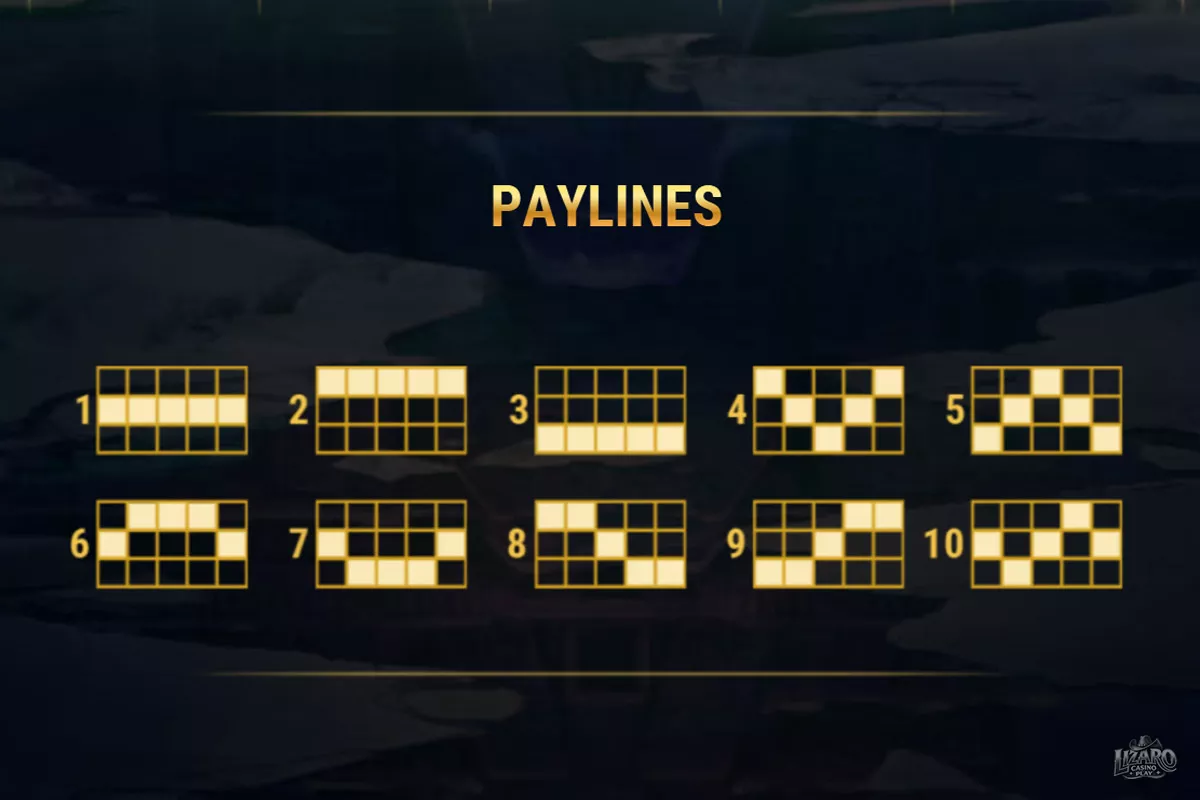
Once a game goes beyond five, paylines usually combine horizontals, diagonals, and “zigzags” that step up or down between reels. These patterns are designed to cover more symbol positions, so wins can appear from many angles rather than only straight lines.
A common beginner surprise: a line can move between rows from reel to reel, so a winning combination might look scattered until you highlight the active path.
20-line and 25-line (full-coverage on a 5x3 grid)
On a standard 5-reel, 3-row screen, 20 and 25-line configurations are popular because they feel like “most of the board is in play.” The extra lines are typically additional zigzags and diagonals that connect many different row transitions.
With more active routes, you’ll usually see more frequent small wins, but the stake is often split across more lines when you bet per line.
50+ paylines (dense multi-line slots)
When you reach 50, 100, or even more fixed lines, the exact shapes matter less for day-to-day play because so many paths overlap. At that point, it’s best to rely on the game’s line highlight feature to understand why a win counted.
These games can produce lots of simultaneous line hits on a single spin, which is why the win display may show multiple combinations being paid at once.
“All ways” / ways-to-win (not paylines, but often compared)
Some modern slots don’t use traditional lines at all. Instead, they pay for matching symbols on adjacent reels in any position (for example, any symbol on reel 1 can connect to any matching symbol on reel 2, and so on). This is often called ways or ways-to-win.
It’s worth knowing because players sometimes call these “paylines,” but the logic is different: you’re counting reel-to-reel connections rather than following a single drawn path.
| Layout type | Typical reel grid | How wins are formed | What it feels like in play |
|---|---|---|---|
| 1 payline (classic) | 3x3 or 5x3 | One fixed line, usually straight across | Very easy to track; fewer winning paths |
| 3–5 paylines | 5x3 | Horizontals plus simple diagonals | Clear patterns; introduces diagonal wins |
| 9–25 paylines | 5x3 | Mix of horizontals, diagonals, and zigzags | More frequent line hits; harder to “spot” without highlights |
| 50+ fixed paylines | 5x3 (sometimes larger) | Many overlapping fixed paths | Lots of small combinations; relies on the payline display |
| Ways-to-win (no paylines) | Often 5x3, 5x4, 6x4, etc. | Any matching symbols on adjacent reels connect | Wins can stack quickly; different logic than line patterns |
If you’re unsure what layout a specific game uses, open the paytable or info screen and look for a “Paylines” section. Highlighting a winning line after a spin is the quickest way to train your eye to recognize these patterns.
Strategies for choosing slots with different paylines
Pick a payline setup based on how you want your balance to behave during a session. Fewer lines usually means fewer paid combinations to check per spin, while many-line games create more chances for small hits but can raise the total cost per spin if each line is active.
Start with your budget and cost per spin
The most common beginner mistake is comparing games by “number of paylines” without looking at the actual stake. What matters is the total bet: coin value (or bet per line) multiplied by active lines, or a fixed “all ways” stake in ways-to-win slots.
- If you want longer playtime, consider games where you can lower the total bet easily (adjustable lines or flexible coin size).
- If you prefer bigger single wins, you may accept a higher total bet, but set a hard limit per spin before you start.
- Always confirm what changes when you adjust the stake: some slots change bet per line, others change coin size, and some change both.
Match payline count to your volatility comfort
Paylines don’t automatically equal “riskier” or “safer,” but they influence how wins are distributed. With more active lines (or ways), you often see more frequent low-to-mid payouts, while fewer lines can feel swingier because you rely on fewer paths to connect symbols.
Use your own reaction as a guide: if long dry spells tilt you, a multi-line or ways game can feel smoother. If you find frequent tiny wins distracting and want clearer “hit or miss” spins, fewer lines may suit you better.
Choose between fixed lines, adjustable lines, and “ways”
Different payline systems change how much control you have over the stake and how easy it is to understand results.
| Payline system | What it usually means for you | Good fit if you want… |
|---|---|---|
| Adjustable paylines (you pick 1–X lines) | You can reduce total bet by lowering the number of active lines; wins only count on enabled lines | More control over cost per spin and a simpler bankroll plan |
| Fixed paylines (always X lines) | Total bet changes mainly via coin size or bet level; all paylines are always active | Set-and-forget gameplay with fewer settings to manage |
| Ways-to-win (e.g., 243/1024+ ways) | No traditional lines; matching symbols on adjacent reels can pay in many combinations | Frequent small hits and less focus on line patterns |
| Megaways-style (variable ways per spin) | Number of symbol positions (and ways) changes each spin; cost is typically fixed but outcomes vary | Highly dynamic spins and you’re comfortable with bigger swings |
Use the paytable to avoid false assumptions
Two slots can both have 20 paylines and still behave very differently. Before committing, check:
- Minimum win size (does it pay for 2, 3, or 4 of a kind?)
- Whether wins pay “left to right” only or also right to left
- How wilds and scatters work (wild substitutions, scatter payouts, and whether scatters are line-based or anywhere)
- Any caps or special rules (some features change how paylines pay during free spins)
Practical selection rules for beginners
Keep your choice simple: decide your maximum total bet, then pick the payline format that lets you stay under it without constant adjustments. If a game forces you into a higher stake because all lines are fixed and expensive, it may not be a good match for your session goals.
Finally, remember that paylines shape how wins appear, not whether the game is “due.” Treat each spin as independent, and use paylines as a tool for managing cost, clarity, and the pace of payouts.
Common mistakes players make with paylines
Most confusion comes from treating lines as “just decoration” or assuming they work the same on every slot. Paylines affect which symbol patterns can form a win, how many ways you can connect symbols, and how often small payouts appear. Clearing up a few typical misunderstandings can save you from misreading results and mismanaging your bet.
Assuming every visible line is active
Many games show a web of lines, but that doesn’t always mean all of them are in play. On older-style slots, you may need to select the number of lines; on “ways” slots, there may be no traditional lines at all. If you don’t check what’s enabled, you can think you “should have won” when the pattern you saw wasn’t actually eligible.
What to do instead: open the paytable and confirm whether the game uses fixed lines, adjustable lines, or a ways system, and how wins are evaluated.
Mixing up “bet per line” with “total bet”
This is one of the fastest ways to overspend. A small-looking stake can multiply quickly when it’s applied across many lines. For example, increasing the coin value or bet level often increases the wager on every active line, not just one.
- Bet per line is the amount assigned to each active payline.
- Total bet is bet per line multiplied by the number of active lines (or the game’s equivalent, like ways).
- Result: changing one setting can raise your total stake more than you expect.
Expecting wins to pay both left-to-right and right-to-left
Direction matters. Some slots only pay from the leftmost reel to the right; others pay both ways; a few use “anywhere” rules for certain features. If you assume the wrong direction, you’ll misread near-misses as “bugged” outcomes.
Check the paytable wording for win direction and whether scatter symbols or bonus symbols follow separate rules.
Overlooking symbol matching rules (adjacent vs. anywhere)
Paylines typically require matching symbols to be adjacent from the starting reel. Newer mechanics sometimes allow gaps, wild substitutions, or “ways” connections that don’t follow a drawn line. Players often glance at the reels, see three matching icons, and miss that they weren’t connected under the game’s rules.
Thinking more paylines automatically means “better odds”
More lines usually means you’ll hit smaller wins more often, but it doesn’t guarantee higher long-term returns. The game’s RTP and volatility do that heavy lifting. Activating more lines can also raise your total bet, which changes how quickly your balance swings.
| Mistake | What players expect | What actually happens | Better habit |
|---|---|---|---|
| Enabling more lines to “improve RTP” | Higher return because more patterns can win | RTP is usually fixed; more lines mainly changes hit frequency and total stake | Choose line count based on budget and preferred volatility, not “guaranteed” value |
| Ignoring win direction | Any three-in-a-row pays | Many slots pay only left-to-right on paylines | Confirm the direction rule in the paytable before judging outcomes |
| Confusing bet settings | Raising “coin value” is a tiny change | It can multiply across every active line and increase total bet sharply | Re-check total bet after every adjustment |
| Misreading wild/scatter behavior | Wilds replace everything; scatters work like line symbols | Wilds often exclude certain symbols; scatters may pay anywhere or trigger features | Learn which symbols substitute, which don’t, and how scatters are counted |
Not noticing capped paylines or “fixed” configurations
Some slots are locked to a fixed number of lines, even if the interface shows line graphics. Others cap the maximum lines unless you increase the bet level. If you’re trying to play fewer lines to reduce risk, you may not have that option on a fixed-payline game.
Chasing “almost wins” caused by line layouts
Diagonal and zig-zag lines create lots of near-miss visuals. Players sometimes interpret these as a sign the machine is “warming up.” In reality, paylines are just a map for evaluating outcomes; the next spin is independent. A healthier approach is to decide your stake and session limit first, then let the line patterns be what they are.
Quick checklist before you spin
- Confirm whether the game uses paylines, ways, or clusters.
- Check win direction and whether wilds/scatters have special rules.
- Verify your total bet, not just bet per line or coin value.
- Make sure you know which lines (or ways) are actually active.
FAQ about slot paylines
1. What is a payline in a slot?
A payline is a predefined path across the reels that the game checks for matching symbols after each spin. If the required symbols land on that path in the correct order (based on the game’s rules), it can create a winning combination.
2. Do paylines always run straight across?
No. Older “classic” games often use straight horizontal lines, but many modern titles include zigzags, V-shapes, and other patterns. The payline map is fixed by the game design, so you can’t draw your own line; you can only choose how many of the available lines you want active (if the game allows it).
3. What does “ways to win” mean, and how is it different from paylines?
“Ways” (also called “all ways” or “ways pays”) games usually don’t use fixed line patterns. Instead, they pay when matching symbols appear on adjacent reels from left to right in any position. This means you can win without following a specific line, but the game still has rules about direction, symbol order, and how many reels must match.
4. Do more active lines mean better chances of winning?
Activating more lines generally increases how often you’ll hit some kind of win because more symbol paths are being evaluated. However, it also increases your total bet per spin if the coin value stays the same. Importantly, more lines don’t guarantee profit, and they don’t automatically change the game’s long-term payout characteristics.
5. Does changing paylines affect RTP or volatility?
It depends on the slot. Some games keep the return to player (RTP) essentially the same regardless of line selection by adjusting how bets are distributed. Others can have small differences because fewer active lines may reduce the frequency of smaller hits. Volatility (how “swingy” results feel) is usually driven more by the paytable, bonus features, and symbol design than by line count alone.
6. How do I read a paytable for paylines?
Start with three things: (1) which symbols pay, (2) how many matching symbols are required, and (3) whether wins must start from the leftmost reel. Many slots also show a “lines” or “win lines” screen that illustrates each pattern. If the game supports it, check whether it pays both directions or only left-to-right.
7. What’s the difference between “bet per line” and “total bet”?
Bet per line is the amount staked on each active payline. Total bet is bet per line multiplied by the number of active lines (or, in ways games, the stake per spin set by the interface). Two players can choose the same total bet but spread it differently depending on the game’s options.
8. Can I win on multiple paylines in one spin?
Yes, if different lines form separate winning combinations, the slot can pay them all in the same result. Most games also have rules to prevent “double counting” the same symbol positions for conflicting wins on the same line, but wins across different lines are commonly added together.
9. What are fixed paylines, and why do some slots not let me choose the number of lines?
Fixed-line slots have a set number of active lines every spin. Designers use this to keep gameplay simple and to balance payouts around a consistent total bet structure. In these games, you usually adjust only the stake (and sometimes the number of coins) rather than turning lines on and off.
10. Do paylines matter during free spins or bonus rounds?
Usually they do, but bonuses can modify how wins are counted. Free spins may add extra lines, switch to a different reel set, change symbol values, or introduce multipliers. Always check the bonus rules, because the line patterns might stay the same while the payout behavior changes.
11. Why did I see matching symbols but didn’t get paid?
Common reasons include:
- The symbols weren’t on an active line (in adjustable-line games).
- The game requires wins to start from the leftmost reel, and your match started later.
- You didn’t have enough matching symbols to meet the minimum (for example, 3-of-a-kind required).
- A scatter or bonus symbol pays differently and doesn’t use line rules.
12. Are scatters and wilds affected by paylines?
Wilds usually help complete line-based combinations by substituting for other symbols (with exceptions listed in the paytable). Scatters typically ignore line patterns and pay based on how many appear anywhere on the reels, often triggering free spins or a bonus feature.
13. Is a 243-ways slot the same as having 243 paylines?
Not exactly. “243 ways” means there are 3 possible symbol positions per reel across 5 reels (3×3×3×3×3), and any left-to-right adjacent match can count. That can feel similar to having many lines, but it’s calculated differently, and the paytable is usually tuned to that system.