How Online Slot Machines Work

 Online slot machines may look simple, but behind the spinning reels there is complex technology. This guide explains how online slots work, including random number generators (RNG), paylines, RTP, volatility, and bonus features that determine how wins and payouts are calculated.
- How RNG Determines Slot Results
- How Reels and Symbols Work
- How Paylines and Winning Lines Work
- How Slot Machine Payouts Are Calculated
- What RTP Means in Slot Machines
- How Slot Volatility Affects Wins
- How Bonus Features and Free Spins Work
- Are Online Slots Random or Predictable
- Tips for Understanding Slot Mechanics
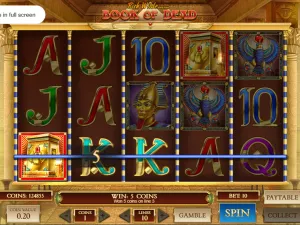
Online slot machines are digital casino games designed to simulate the experience of traditional slot machines. Instead of physical reels and mechanical components, modern slots run entirely on software. The reels, symbols, and animations you see on the screen are generated by the game engine, as can be seen in popular titles like Book of Dead Slot.
The basic idea is simple: a player places a bet, spins the reels, and wins when certain symbol combinations appear on active paylines. Although the gameplay looks straightforward, online slots rely on mathematical algorithms that control probabilities, payouts, and bonus mechanics.

Most online slot games share several common components that form the core structure of the gameplay:
- Reels — vertical columns where symbols appear after each spin.
- Rows — horizontal positions that form the visible grid of the slot.
- Paylines — patterns across the reels that determine winning combinations.
- Symbols — icons that create wins when they align correctly.
- Bonus features — additional mechanics such as free spins, multipliers, or bonus rounds.
Different slot games may vary in theme, graphics, and special features, but the basic structure remains similar. Understanding these elements helps explain how online slot machines operate and how wins are formed.
How RNG Determines Slot Results
Behind every online slot machine there is a system that determines the outcome of each spin. This system is called a Random Number Generator (RNG). It is a mathematical algorithm designed to generate sequences of numbers that appear random and unpredictable.
The RNG runs continuously while the game is active. Even when no one is spinning the reels, the algorithm is constantly producing thousands of numbers every second. When a player presses the spin button, the game instantly captures one of those numbers and uses it to determine the result of the spin.

Each number generated by the RNG corresponds to a specific position of symbols on the reels. The slot software translates that number into a visual result on the screen. The spinning animation that players see is only a visual effect — the outcome has already been decided the moment the spin button is pressed.
To better understand how this works, it helps to look at a simplified example of how RNG mapping might operate inside a slot game.
- The RNG generates a random number. For example, the algorithm may produce a number between 0 and 9,999.
- The game maps the number to reel positions. Each number range corresponds to a specific combination of symbols on the reels.
- The slot displays the result. The game engine shows the reel animation that matches the selected symbol combination.
In modern slots, RNG does not directly choose whether the player wins or loses. Instead, it selects the position of symbols on each reel. Each reel contains a virtual strip with many symbol positions, and the RNG determines where the reel stops.
A simplified example of the process looks like this:
- The RNG generates a random number.
- The number selects a stopping position on Reel 1.
- The process repeats for Reel 2, Reel 3, Reel 4, and Reel 5.
- The symbols shown on those positions form the final screen result.
For example, the RNG might select positions like this:
- Reel 1 — position 12 (symbol A)
- Reel 2 — position 7 (symbol K)
- Reel 3 — position 18 (wild symbol)
- Reel 4 — position 3 (symbol Q)
- Reel 5 — position 25 (symbol A)
After the symbols are selected, the game checks whether they form a winning combination according to the paylines or ways-to-win system. If the symbols match a valid pattern, the player receives the corresponding payout defined in the paytable.
There are also different types of RNG systems used in gaming software.
- Pseudo-Random Number Generators (PRNG). These are algorithm-based systems used in most online slots. They rely on mathematical formulas and seed values to generate sequences that appear random.
- True Random Number Generators (TRNG). These systems use physical sources of randomness such as electronic noise. They are rarely used in online slots because PRNG systems are already statistically reliable and much faster.
One of the most important properties of RNG systems is that every spin is independent. The game does not track previous results and cannot become “due” for a win after a losing streak. Each spin starts a completely new random calculation.
Because of this system, the outcome of a slot spin cannot be predicted or influenced by timing, betting patterns, or previous results. The RNG ensures that every spin remains an independent random event.
How Reels and Symbols Work
In online slot machines, reels are the vertical columns that spin when a player presses the spin button. Modern slots usually have five reels, although some games use three or even more depending on the design of the game.

Each reel contains multiple symbols arranged in a sequence determined by the slot’s internal configuration. When the reels stop spinning, the game displays a small visible portion of those symbols, usually arranged in a grid such as 5×3 (five reels and three rows).
Symbols are the icons that appear on these reels. They form the basis of all winning combinations in the game. Slot symbols can vary depending on the theme of the game, but they generally fall into several common categories.
- Standard symbols — regular icons that form normal winning combinations.
- High-value symbols — usually themed characters or objects that pay the highest rewards.
- Low-value symbols — often card ranks like A, K, Q, J, and 10.
- Special symbols — symbols such as Wilds or Scatters that trigger special mechanics.
The arrangement of symbols on the reels is not random in a simple sense. Each slot has a predefined symbol distribution that determines how frequently certain symbols appear. High-paying symbols typically appear less often, while low-value symbols appear more frequently. This balance is part of the mathematical model that controls how often players win and how large those wins can be.
How Paylines and Winning Lines Work
Paylines determine how symbols must align on the reels in order to create a winning combination. A payline is a predefined pattern that runs across the reels, usually from left to right. In classic slot machines, paylines were simple straight horizontal lines across the middle of the reels. Modern online slots often include multiple paylines that can follow different patterns across the grid.

For example, a slot with five reels and three rows may include paylines that run straight across, diagonally, or in zigzag patterns. The game checks these patterns after every spin to determine whether matching symbols appear along any active line.
A winning combination usually requires at least three identical symbols appearing consecutively along a payline, starting from the leftmost reel. If the required number of matching symbols appears along an active payline, the player receives a payout according to the slot’s paytable.
The number of paylines varies widely between games. Some slots use a fixed number of paylines, while others allow players to activate or deactivate certain lines depending on their betting preferences. Understanding paylines is important because they directly influence how often wins occur and how combinations are evaluated during gameplay.
How Slot Machine Payouts Are Calculated
When a winning combination appears on the reels, the slot machine calculates the payout using a predefined paytable. The paytable is a list inside the game that shows how much each symbol combination pays depending on how many matching symbols appear on a payline.
Most online slots require at least three identical symbols to form a winning combination. The payout increases when four or five matching symbols land consecutively along an active payline. Higher-value symbols usually provide larger payouts, while lower-value symbols pay smaller amounts. The final win amount is also affected by the player's bet. In most slot machines, the value of a winning combination is multiplied by the bet placed per line. This means that increasing the bet can significantly increase the size of potential payouts.
Slot machines also follow a few general rules when calculating wins:
- The highest paying combination is paid when multiple wins appear on the same payline.
- Winning combinations usually start from the leftmost reel.
- Some symbols, such as Wilds, can substitute for other symbols to complete a winning combination.
- Scatter symbols may pay anywhere on the reels and often trigger bonus features.
Because every slot has its own paytable and symbol values, the exact payout structure can vary from game to game. Checking the paytable before playing helps players understand how wins are formed and which symbols offer the highest rewards.
What RTP Means in Slot Machines
RTP stands for Return to Player and represents the theoretical percentage of wagered money that a slot machine pays back to players over a very long period of play. It is one of the most important statistics used to describe how a slot game behaves.

For example, a slot with an RTP of 96% theoretically returns $96 for every $100 wagered across thousands or millions of spins. The remaining percentage represents the casino’s long-term mathematical advantage.
It is important to understand that RTP does not guarantee short-term results. A player may win more or less than the RTP percentage during a short session because the outcomes of individual spins are random.
| Metric | What it measures | What players experience |
|---|---|---|
| RTP | The theoretical return percentage of a slot | Higher RTP means better long-term payout potential |
| Volatility | The risk level of the slot game | High volatility means larger but less frequent wins |
| Hit Frequency | How often a slot produces any win | Higher hit frequency means more regular small wins |
Understanding RTP helps players compare different slot machines and estimate their long-term payout potential. However, since slot outcomes are determined by random number generators, the result of any individual spin remains completely unpredictable.
How Slot Volatility Affects Wins
Volatility, sometimes called variance, describes how often a slot machine produces wins and how large those wins tend to be. It is one of the key characteristics that defines the behavior of a slot game. Low-volatility slots usually provide frequent but smaller payouts. Players may see wins appearing regularly, but the prize amounts are typically modest. These games are often preferred by players who want longer playing sessions with more consistent results.

High-volatility slots behave differently. In these games, wins may occur less frequently, but when they do happen they can be significantly larger. Some of the biggest payouts in online slots usually come from high-volatility games, especially during bonus rounds or special features.
Many modern slots are designed with medium or high volatility because this allows developers to include large win potential while maintaining the mathematical balance of the game.
Understanding volatility helps players choose games that match their playing style. Some players enjoy steady smaller wins, while others prefer chasing larger payouts that appear less often.
How Bonus Features and Free Spins Work
Most modern online slot machines include additional mechanics known as bonus features. These features add variety to the gameplay and often provide opportunities for larger payouts compared to the base game.
The most common feature in slot games is the free spins round. Free spins are usually triggered when a specific symbol, often called a Scatter, appears on the reels a certain number of times. Once activated, the player receives a number of spins without paying an additional bet.
During free spins, the game may introduce extra mechanics that increase the potential for wins. These can include expanding symbols, multipliers, additional wild symbols, or special bonus rules that only apply during the feature.
Many slot games also include other bonus mechanics that can appear randomly or be triggered by special symbol combinations.
- Wild symbols that substitute for other symbols to help form winning combinations.
- Multipliers that increase the value of wins.
- Bonus rounds with interactive mini-games.
- Expanding or stacked symbols that cover entire reels.
Are Online Slots Random or Predictable
One of the most common questions players ask is whether online slot machines are truly random or if their outcomes can somehow be predicted. In regulated online casinos, slot games operate using certified Random Number Generator (RNG) systems that ensure each spin is independent and unpredictable.

The RNG constantly produces random numbers, and the moment a player presses the spin button the system selects one of those numbers to determine the exact reel combination. Because the algorithm works continuously and at extremely high speed, there is no pattern that players can track or exploit.
This means that previous spins do not influence future results. A slot machine does not “remember” losses or wins, and it does not become “due” for a payout after a long losing streak. Each spin has the same statistical probability regardless of what happened before. Licensed slot games are also tested by independent auditing companies that verify the fairness of the software. These tests confirm that the RNG produces statistically random outcomes and that the game follows its published RTP values over long-term play.
For this reason, strategies that claim to predict slot outcomes or manipulate results are misleading. While players can choose games with better RTP or volatility levels, the outcome of any individual spin always remains random.
Tips for Understanding Slot Mechanics
Online slots may appear simple at first glance, but several underlying mechanics determine how the game behaves over time. Factors such as RTP, volatility, paylines, and bonus features influence how often wins occur and how large those wins can be. While these mechanics do not allow players to predict outcomes, understanding them helps interpret how a slot is designed to perform.
Before playing a new slot game, it is useful to review a few key elements that reveal how the game works. Most slot interfaces include a paytable or information section that explains these mechanics in detail. Taking a moment to review this information can help players better understand the structure of the game.
- Check the paytable before playing. The paytable explains the value of each symbol, how many matching symbols are required to form a win, and which symbols act as wilds or scatters. It also describes how bonus features are triggered and how payouts increase across different reel combinations.
- Look at the RTP percentage. RTP (Return to Player) represents the theoretical percentage of wagered money that a slot is designed to return to players over a very long period of play. For example, a slot with a 96% RTP theoretically returns $96 for every $100 wagered across millions of spins. Although individual sessions can vary widely, RTP gives a general idea of the long-term payout structure.
- Understand the volatility level. Volatility describes how often wins appear and how large they tend to be. High-volatility slots typically produce fewer wins but offer the potential for larger payouts, while low-volatility games tend to generate more frequent but smaller wins. Knowing this helps players choose games that match their preferred play style.
- Pay attention to paylines or win systems. Different slots use different systems for forming wins. Some games use fixed paylines, others use adjustable paylines, and many modern slots use systems such as ways-to-win or cluster mechanics. Understanding how the game counts winning combinations helps players see how symbols must align.
- Review the bonus features. Bonus mechanics such as free spins, expanding symbols, multipliers, or special mini-games can significantly influence the payout potential of a slot. Some games rely heavily on bonus rounds to deliver their largest rewards, so understanding how these features are activated can help explain the overall gameplay structure.
- Recognize that outcomes remain random. Even with a full understanding of slot mechanics, each spin is still determined by the RNG system. This means previous results do not influence future spins, and no strategy can change the probability of a specific outcome.
Learning these mechanics does not provide a way to control results, but it helps players understand what to expect from a slot game. By examining the paytable, volatility, and payout structure, players can better interpret how a slot behaves and choose games that align with their preferences.