Bonus Buy Feature in Slot Games Explained

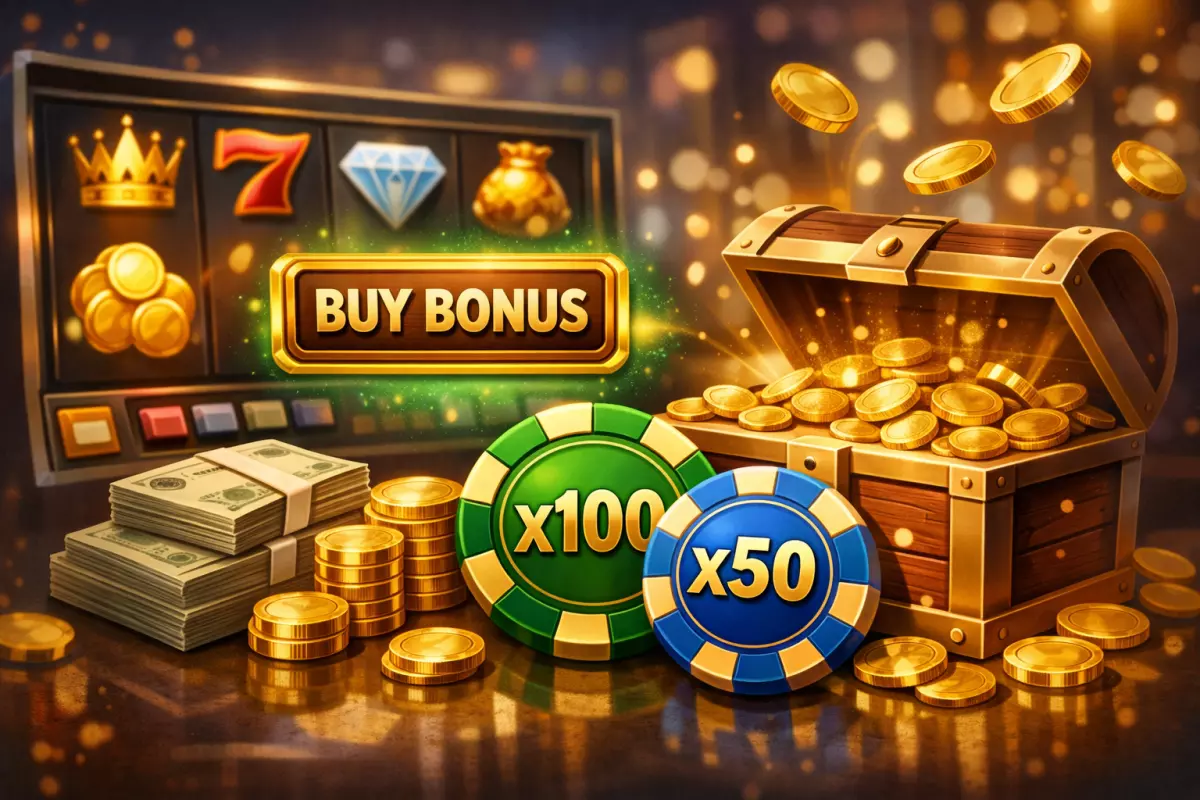 This article explains what bonus buy features are in slot games and how buying bonus rounds works, including typical costs and how RTP can change. It also lists slots that offer bonus buys, outlines key advantages, risks, and common rules, and shares tips for using them.
A slot bonus purchase option lets you pay a fixed price to enter a game’s feature round immediately, rather than spinning until it triggers. It can speed up play and help you plan a session, but it also increases variance, can require a larger bankroll, and may affect your expected value depending on the game’s pricing. Check the cost and rules so you know when it’s worth using.
What bonus buy features are in slot games
A bonus buy is an optional in-game purchase that lets you pay a set price to jump straight into a slot’s special round, typically the free spins feature. Instead of waiting for scatters to land naturally, you trade extra cost for immediate access to the bonus mechanics and their potential payouts.
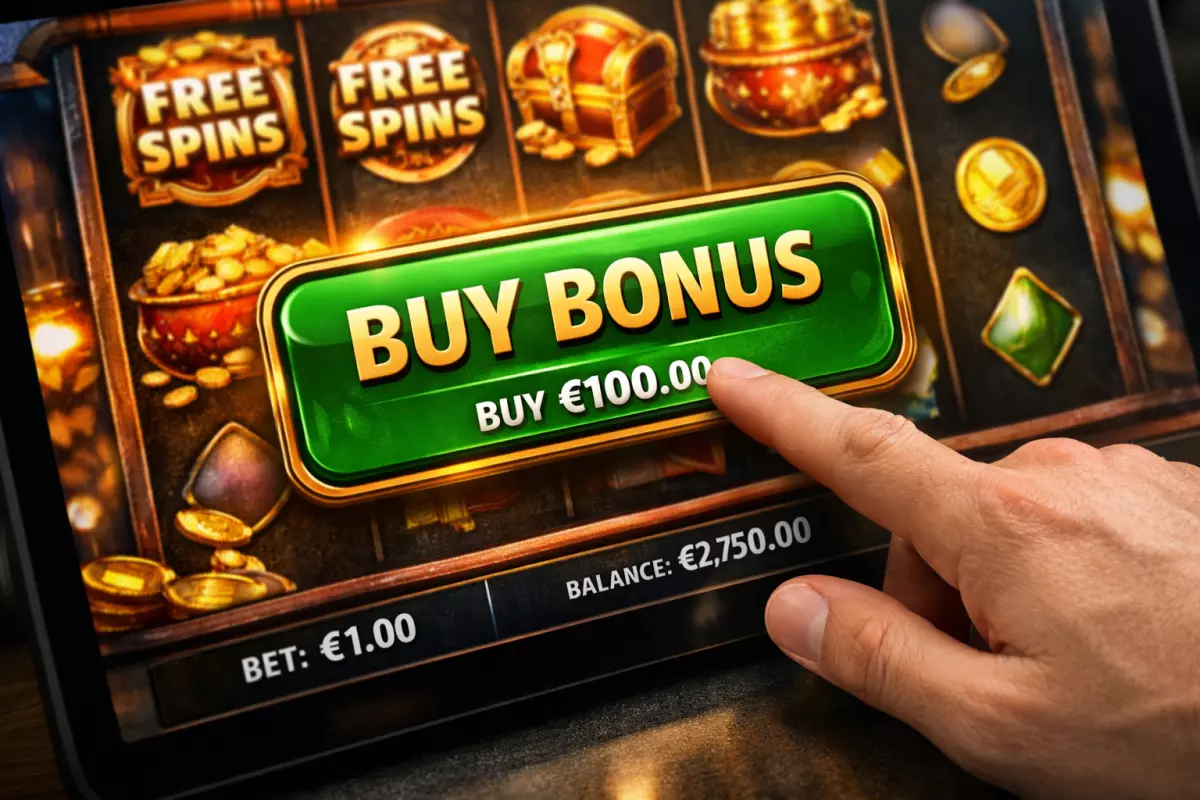
This option is usually presented as a button on the game interface. When you activate it, the game deducts the purchase amount (often shown as a multiple of your current bet) and then triggers the feature with the same rules you would get if you had hit it through normal spins.
How it works in practice
The purchase price is commonly tied to your stake, such as 50x, 75x, or 100x the bet, though the exact multiplier depends on the title. After you confirm, the base game is skipped and the bonus round begins immediately, using the game’s standard bonus structure: free spins, multipliers, expanding symbols, reels with altered layouts, or other feature-specific changes.
Importantly, buying a feature does not guarantee profit. It simply changes when you access the bonus and how much you pay to do so. The outcome is still determined by the game’s RNG, and the bonus can pay less than the purchase cost.
Common types of bonus buys
Not all games offer the same purchase menu. Some provide a single “buy free spins” option, while others offer several feature entries at different prices. Typical variants include:
- Standard bonus entry: the basic free spins round at the lowest available purchase price.
- Enhanced bonus entry: a more expensive option that adds extra scatters, more starting spins, or a higher starting multiplier.
- Pick-your-volatility options: choices that tilt the bonus toward steadier returns or bigger swings, depending on the game’s design.
- Super/guaranteed modifiers: purchases that guarantee a certain mechanic appears (for example, a minimum number of special symbols at the start).
What changes compared to normal play
The biggest difference is cost structure. In regular spins, you pay small amounts repeatedly while waiting for a trigger; with a feature purchase, you pay a large one-time amount to access the bonus instantly. This can make bankroll swings sharper, especially if you buy several rounds in a row.
Another difference is pacing and experience. Some players use bonus buys to focus on the “main event” mechanics (like multipliers or sticky wilds) rather than spending time in the base game. Others prefer natural triggers because they spread risk across many spins and can feel less abrupt financially.
Key details to check before you buy
Games usually disclose the purchase price and the bonus rules on the info screen, but it’s still worth confirming a few practical points before committing:
- Price multiplier: how many times your current bet the feature costs.
- Bonus rules: whether it’s the same free spins feature as a natural trigger or a modified version.
- Maximum win and caps: some slots apply win limits that affect both purchased and naturally triggered bonuses.
- Volatility expectations: bought features often feel higher variance because you’re paying upfront and results can be uneven.
In short, the bonus buy feature is a convenience tool that exchanges time and uncertainty of triggering for an upfront fee and instant access to the bonus round, with the same randomness and risk that comes with any slot outcome.
How bonus buy works in slots
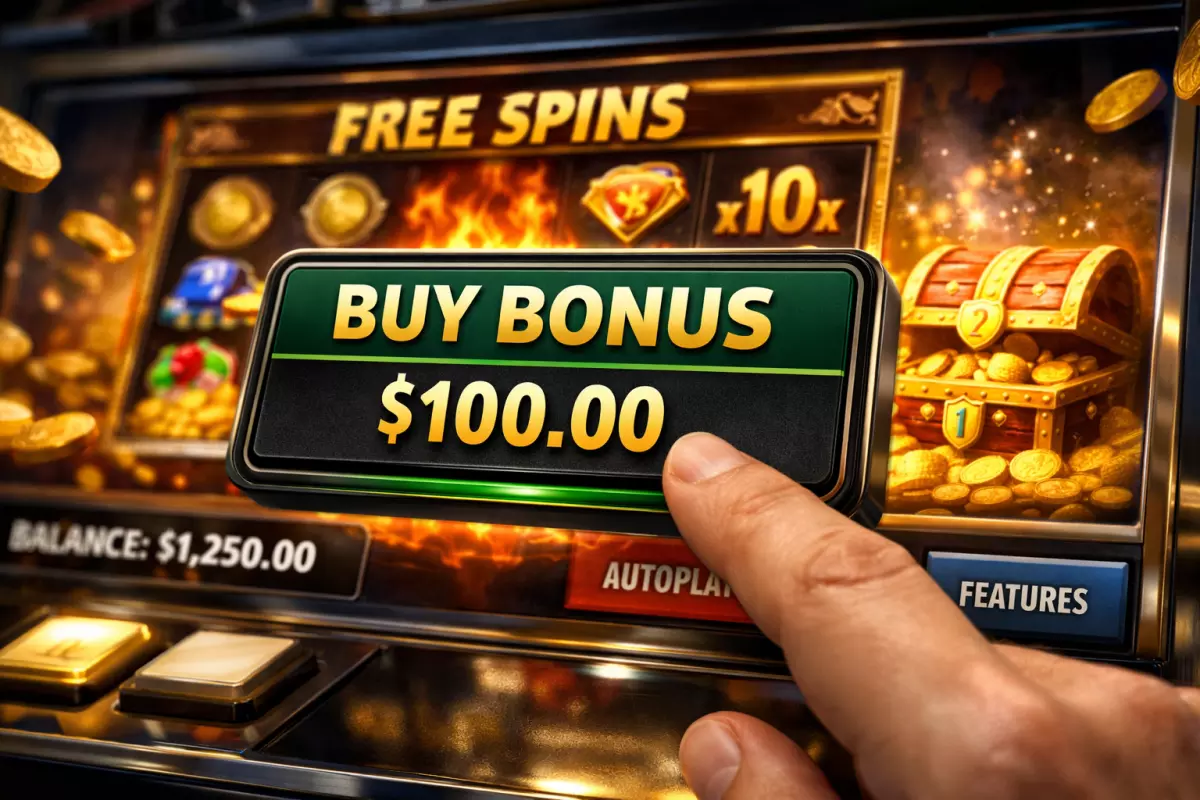
A bonus buy lets you pay a fixed price to jump straight into a slot’s bonus round instead of waiting for it to trigger naturally. In practice, you’re exchanging an unknown number of spins for immediate access to features like free spins, multipliers, expanding symbols, or pick-and-win rounds.
The option is usually shown as a button in the game interface (often near the autoplay or feature menu). Once selected, the game deducts the buy-in amount from your balance and starts the bonus feature right away, using the same RNG mechanics as if it had triggered during regular play.
What you’re paying for (and what you’re not)
The buy price is typically expressed as a multiple of your current bet (for example, 50x, 75x, 100x, or more). That price is meant to reflect how rare the feature is during standard spins, plus the value of the bonus mechanics. However, paying for entry does not “guarantee profit.” It only guarantees access to the feature.
Most games treat bought bonuses as the same bonus you’d get from a normal trigger, but some titles adjust the rules. Common differences can include starting with fewer free spins, altered volatility, different symbol distributions, or a separate “super” buy that includes extra modifiers. The details are always defined by the game’s paytable and feature info.
Typical flow when you use a bonus purchase
- Select your stake (your bet size often determines the buy-in cost because it’s a multiplier of the bet).
- Choose the bonus buy option (some games offer more than one feature to purchase).
- Confirm the price and any terms shown (like “standard bonus” vs. “enhanced bonus”).
- Enter the bonus round immediately (free spins, respins, hold-and-win, or a mini-game).
- Bonus ends and pays out according to the same win rules, caps, and paylines/ways as the game specifies.
How it affects RTP and volatility
Whether a bonus purchase changes RTP depends on the specific slot. Some games keep the theoretical return the same across base play and bought features, while others offer a separate RTP setting for the buy option (or allow casinos to configure different RTP versions). If the RTP differs, it’s usually disclosed in the information panel.
Volatility is the bigger practical change for most players. Buying the feature concentrates your results into fewer, higher-stakes events: you’ll see larger swings because you’re paying a big chunk up front and then relying on the bonus outcome to recover that cost (or not).
Common bonus buy variants you’ll see
Not every slot uses the same purchase model. Some offer a single “buy feature” button, while others provide tiers that change the starting conditions of the bonus.
| Variant | What it usually changes | Why it matters |
|---|---|---|
| Standard bonus buy | Direct entry into the regular bonus round | Closest to a natural trigger; still high variance |
| Enhanced / Super buy | Extra multipliers, guaranteed modifiers, or better starting setup | Higher cost with a stronger “ceiling,” but not a guaranteed better result |
| Choice of bonus type | Select between two or more bonus modes (e.g., different free-spin rules) | Lets you pick a risk profile, not a sure advantage |
| Ante bet alternative | Increases base bet to raise bonus trigger chance instead of buying it outright | Still involves spinning, but shifts cost and frequency of features |
Important constraints and edge cases
Bonus buy availability can depend on local rules and the casino’s settings. In some jurisdictions it’s restricted or removed entirely, and some operators disable it for certain player segments or game versions.
Also note that the buy price scales with your bet size. If you raise the stake, you’re not only increasing the potential payout per symbol—you’re also increasing the upfront cost of entering the feature, which can make bankroll swings more intense.
Finally, a bought bonus is still subject to the slot’s win cap (if one exists). That means even an exceptional bonus outcome can be limited by a maximum payout multiplier defined by the game.
Cost of buying bonus rounds
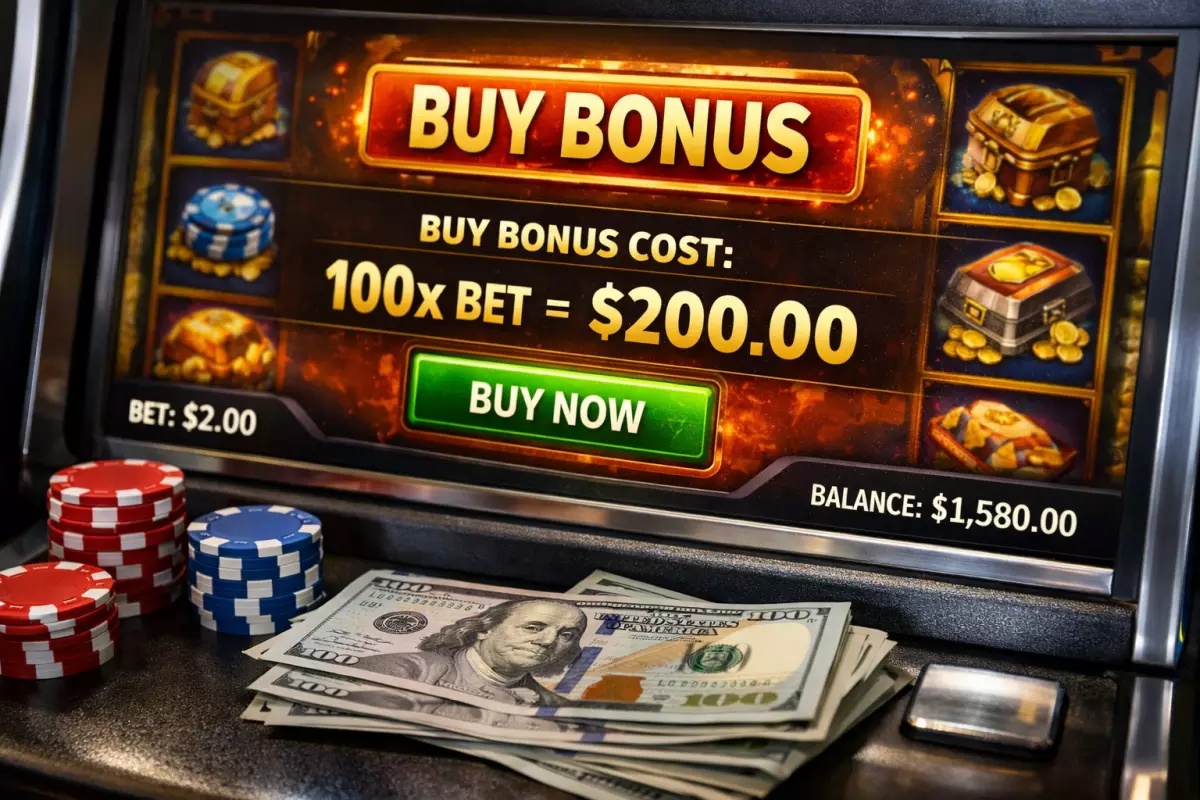
The price of triggering a feature on demand is usually expressed as a multiplier of your current bet. Instead of spinning until the bonus appears naturally, you pay a fixed amount (for example, 50x or 100x your stake) to enter the bonus immediately. This makes budgeting simpler, but it also concentrates variance into a single, larger wager.
How slot games set the buy price
Most games calculate the purchase amount from your selected stake, then apply a preset multiplier chosen by the developer. If you change your bet size, the buy-in changes proportionally. In practice, the multiplier reflects how valuable the bonus round is expected to be over many trials, plus how volatile it can get in the short run.
Some titles offer more than one entry option, such as a standard buy and a “boosted” buy (often with altered reel setups or higher chance of premium symbols). These options are priced differently because the risk and potential payout distribution are different.
Typical pricing ranges (and what they imply)
You’ll commonly see feature purchases priced somewhere between 20x and 200x the base bet, with many popular releases clustering around 50x–100x. Lower multipliers tend to be used for smaller or more frequent bonuses, while higher multipliers are often tied to rounds that can swing hard—either paying very little or occasionally paying a lot.
A higher buy price does not automatically mean “better value.” It usually means you’re paying for access to a more volatile bonus structure, not a guaranteed higher return.
What you actually pay: quick examples
Because the cost scales with your stake, it helps to translate multipliers into real numbers before you click buy. The same multiplier can feel affordable at a small bet and risky at a larger one.
- If your bet is $0.20 and the feature costs 100x, the purchase is $20.
- If your bet is $1.00 and the feature costs 60x, the purchase is $60.
- If your bet is $2.00 and the feature costs 40x, the purchase is $80.
Fees, caps, and rule differences to watch for
In most games, the buy amount is the full cost—there’s no extra “service fee.” Still, the fine print can change how the purchase behaves. Some slots cap maximum wins differently in bonus modes, and some apply different symbol distributions or reel configurations when you buy compared to when the bonus triggers naturally.
Also note that availability can depend on jurisdiction or casino settings. If the option is disabled, it’s not a pricing change—it’s a ruleset restriction.
Bankroll impact and risk management
Buying a bonus round is effectively placing a large single bet. That can be useful if you want fewer base spins, but it increases the chance of quick losses because you’re skipping the “slow burn” of normal play. A practical way to manage this is to decide in advance how many buys you can afford at your chosen stake and stop once you hit that limit.
If you’re comparing games, focus on the relationship between the buy multiplier and the game’s volatility. Two slots can both charge 100x, yet one may frequently return small payouts while the other is more “all-or-nothing.”
How RTP changes with bonus buy

Buying a feature can shift the game’s theoretical return because you’re changing which part of the math model your money is exposed to. Instead of playing through the base game and occasionally reaching a bonus round, you pay to jump straight into the higher-volatility segment. Depending on how the slot is designed, that can leave the long-term return unchanged, slightly lower, or (more rarely) slightly higher.
It helps to separate two ideas: overall RTP (the published return for normal play across base game plus bonuses) and feature RTP (the expected return when you enter the bonus directly). Some studios keep these aligned; others treat the buy as a separate “mode” with its own expected value.
Why the RTP can differ when you buy the bonus
The most common reason is that a bonus purchase is priced with a built-in margin. When you pay, you’re effectively paying for convenience and for skipping the low-excitement spins that would normally “fund” the bonus over time. If the buy price is set a bit higher than the average cost of naturally triggering the feature, the expected return of the purchase path drops.
Another reason is that the base game may include small “RTP contributions” that you no longer experience as often when you repeatedly buy features. For example, frequent low wins in the base game can add meaningful return over thousands of spins. If you bypass that portion, the distribution of outcomes changes and the theoretical return for your chosen path can move.
What usually stays the same (and what changes)
In many modern slots, the developer targets a stable overall RTP and then tunes the buy option so the expected return is close to the standard mode. Even when the percentage is similar, the risk profile is rarely the same: bonus buys typically concentrate results into fewer, larger swings, which can make the experience feel “worse” or “better” in short sessions without contradicting the math.
What nearly always changes is variance. A feature purchase typically increases volatility because you’re paying for access to a round where outcomes are more spread out: more dead bonuses, more mid-tier hits, and a small chance of a very large win.
Typical RTP patterns you’ll see in slot rules
Studios disclose this differently: sometimes as a single RTP, sometimes as separate RTP values for base game and bonus buy, and sometimes not at all in the UI. When separate numbers are shown, they tend to fall into a few recognizable patterns:
- Same RTP, different volatility: the buy mode is tuned to match the standard return but feels swingier.
- Slightly lower RTP for the buy: the purchase price includes an extra edge, so the expected return is reduced.
- Different RTP by buy option: some games offer multiple buy prices (for example, “cheap” vs. “super” buys) with different expected returns and risk.
- RTP depends on bet configuration: side bets, ante bets, or feature toggles can change the theoretical return in either mode.
How to check the RTP for the bonus buy path
The most reliable source is the in-game help file or paytable, where some providers list RTP for the base game and for the feature purchase separately. If only one RTP is shown, don’t assume the buy has the same return; treat it as unknown unless the rules explicitly say the purchase uses the same math model and RTP.
If you’re comparing options, focus on two numbers (when available): the published RTP for the buy feature and the buy price multiple (for example, 50x, 75x, 100x your bet). A higher price doesn’t automatically mean worse value, but it often signals a different volatility tier and sometimes a different expected return.
Slots that offer bonus buy features

Many modern online slot titles let you pay an upfront price to jump straight into a bonus round, skipping the usual wait for scatters or other triggers. This option is most common in high-volatility games where the feature round is the main source of big swings, but it also appears in more balanced titles as a way to control pacing.
Availability depends on where you play: some jurisdictions restrict or disable feature purchases, and some casinos choose not to offer them even when the game supports it. You’ll usually see it as a button near the spin controls, sometimes with multiple “tiers” (for example, a standard buy and a higher-priced enhanced buy).
Common slot series and providers where bonus buys are frequently found
Feature purchases are especially associated with certain studios and “mechanic families.” If you’re trying to identify games likely to include a buy option, these are the names you’ll see most often in lobbies and game info panels:
- Pragmatic Play titles that include “Bonus Buy” or “Feature Buy” in the interface (often paired with mechanics like Hold & Win, multipliers, or free spins modifiers).
- Push Gaming games where the bonus round is central and can often be accessed via a purchase option (commonly free spins with evolving modifiers).
- Nolimit City releases that sometimes offer a “Feature Buy” alongside highly volatile bonus structures (availability can vary by region).
- Relax Gaming and partner studios, where feature buys appear in a number of modern releases, typically as a direct entry to free spins or a special mode.
- Hacksaw Gaming slots that may include a purchase option for bonus rounds, depending on the title and market settings.
Typical bonus buy formats you’ll encounter
Not all purchases work the same way. The “buy” can be a simple shortcut to free spins, or it can be a more expensive entry into a stronger version of the feature. In practice, most games fall into a few patterns:
- Standard bonus entry: pay a fixed multiple of your bet to trigger the base bonus round (often free spins).
- Enhanced feature: pay more to start with extra wilds, higher multipliers, more spins, or a better starting state.
- Pick-your-feature: choose between different bonus types (for example, lower variance vs. higher variance paths).
- Progressive-style entry: buy access to a feature that can “level up” within the bonus (for example, increasing multipliers or expanding reels).
Examples of well-known games that may include a bonus buy option
Because game configurations can change by region, the safest approach is to treat these as common examples rather than guarantees. Still, players often associate bonus purchase functionality with popular titles such as:
| Game (example) | Provider | Typical buy format | What you’re usually buying into |
|---|---|---|---|
| Sweet Bonanza | Pragmatic Play | Standard bonus entry | Free spins with tumble wins and multipliers |
| Gates of Olympus | Pragmatic Play | Standard bonus entry | Free spins with multiplier drops |
| Madame Destiny Megaways | Pragmatic Play | Enhanced feature (varies) | Free spins with Megaways volatility and modifiers |
| Jammin’ Jars | Push Gaming | Standard bonus entry (where enabled) | Free spins with moving wilds and multipliers |
| Wanted Dead or a Wild | Hacksaw Gaming | Pick-your-feature (where enabled) | Different bonus modes with distinct risk profiles |
If you’re unsure whether a specific slot supports a bonus buy feature, check the in-game menu (often labeled “Info,” “Paytable,” or “Game Rules”). It typically states whether a purchase option exists, what it costs in bet multiples, and whether there are multiple buy levels.
One practical tip: treat the buy price as a separate decision from your base stake. Buying features repeatedly can change your session’s volatility and bankroll needs, even if the game’s RTP is similar across spin and buy modes. If you do use the option, it helps to decide in advance how many purchases you’re comfortable making and stop when you hit that limit.
Advantages and risks of bonus buy
Buying direct access to a bonus round can be convenient, but it also changes how you experience variance, bankroll swings, and expectations. The same feature that saves time can make results feel more extreme, because you’re paying upfront for a high-volatility slice of the game.
Why players use a bonus purchase
The biggest practical benefit is control over pacing. Instead of waiting for a random trigger, you can jump straight into free spins, a pick-and-win, or another special mode and see outcomes quickly.
It can also make testing a slot’s bonus mechanics simpler. If you’re trying to understand how multipliers, expanding symbols, or retriggers behave, a feature buy gives you repeated “samples” of the bonus without long base-game stretches in between.
- Faster access to the feature: less time spent on low-event base spins.
- Clearer session structure: some players prefer set “attempts” rather than open-ended spinning.
- More consistent exposure to volatility: you’re engaging the part of the game designed for bigger swings.
- Potentially easier budgeting per attempt: the cost is known before you click, even if the outcome isn’t.
Key risks to understand before using it
The main downside is that you can burn through funds faster. A bonus buy typically costs many times your base bet, so a short streak of weak bonuses can deplete a bankroll in minutes compared with regular spins.
Variance is also concentrated. Bonus rounds often hold most of the slot’s high-end potential, but they also include many low or “dead” outcomes. Paying for entry doesn’t reduce the chance of a poor result; it just compresses the experience into fewer, more expensive events.
Another common pitfall is misunderstanding value. Even if a game advertises a certain RTP, the return for feature buys may differ from base play, and it can vary by provider, title, or buy option. The only safe assumption is that short-term results are unpredictable, and the price does not guarantee a “fair” bonus in any single attempt.
How the trade-offs typically look
| Aspect | Potential advantage | Potential risk |
|---|---|---|
| Time to reach the feature | Immediate access to the bonus round | Less time to “cool off” between high-stakes outcomes, which can amplify emotional decisions |
| Bankroll impact | Known upfront cost per attempt | Rapid drawdown if several bonuses pay low; fewer total attempts than with base spins |
| Volatility exposure | More chances to see multipliers, retriggers, and peak mechanics | Higher swing intensity; long losing streaks can happen even with “good” bonuses |
| Expectation management | Clear focus on the most exciting part of the game | Overestimating hit rates or average payouts; disappointment when bonuses underperform |
| RTP and rules nuance | May help compare different buy options within the same slot | Feature-buy RTP can differ from standard play; terms and payout distribution may not be obvious |
Practical ways to reduce downside
Set a limit based on the buy price, not your base stake. Because each purchase is effectively a large bet, it helps to decide in advance how many attempts you can afford to lose without chasing.
Keep expectations grounded: a bonus purchase is not a shortcut to profit, just a shortcut to the feature. If you use it, treat each buy as an independent event, and stop when you hit your predetermined cap rather than trying to “get even” after a low-paying round.
Common rules in bonus buy slots
When you purchase a bonus round in a slot, the game usually follows a set of predictable rules about pricing, eligibility, and how the feature interacts with the base game. Knowing these mechanics helps you avoid surprises, especially around stake changes, feature availability, and how winnings are capped or reported.
How pricing is typically set
The buy-in cost is most often calculated as a multiple of your current bet (for example, a fixed number of spins’ worth of stake). That means changing your coin value or line bet can immediately change the price of the feature. Some titles also offer more than one purchase option, where a higher price may grant a “stronger” version of the bonus (such as extra symbols, higher starting multipliers, or a guaranteed special setup).
In many games, the purchase is treated as a single transaction that bypasses normal spin-to-trigger odds. You’re not “more likely” to hit the bonus afterward—you’re simply paying to enter it now.
Eligibility and availability checks
Bonus purchases are not always available in every jurisdiction or casino, and the button can be disabled depending on local rules, game settings, or responsible gambling policies. Even when the feature exists, the game may require a minimum balance to cover the full cost, and it may block the purchase if you recently changed stakes or toggled certain settings.
- Regional restrictions: the feature may be removed entirely or replaced with an alternative.
- Session limits: some platforms impose limits on how often you can buy features within a time window.
- Balance requirements: you must have enough funds to pay the full buy price upfront.
What happens to the base game state
Buying a bonus commonly resets or ignores parts of the base-game progression. For example, if a slot uses a “collect” meter, a must-hit-by counter, or a build-up mechanic, the purchase may start the bonus without carrying over that progress. Other titles do the opposite and let some progress persist, but they usually state this clearly in the paytable or info panel.
Also note that a purchased feature typically uses the current bet size at the moment you buy it. If you adjust your stake afterward, it usually won’t retroactively change the bonus you already entered.
Volatility and expected outcomes
A bought bonus often plays out with higher volatility than standard spins because you’re concentrating your risk into fewer events. The game’s return-to-player (RTP) may be the same as the base game, but some slots publish separate RTP values for purchased features or for different buy options. If separate RTPs exist, they can be higher or lower than regular play depending on the design.
Win caps, maximum exposure, and payout limits
Many slots have a maximum win cap (for example, a maximum multiplier of your stake). That cap usually applies whether the bonus was triggered naturally or purchased. In practical terms, even if the bonus round goes exceptionally well, it may stop paying once the game reaches its maximum allowed win.
Casinos can also apply platform-level limits (such as maximum payout per spin or per round), which may affect large bonus wins. These are not “rules of the feature” but can still impact what you receive.
Common rule variations by buy option
When a slot offers multiple purchase buttons, each option typically changes one or more parameters of the bonus entry. The differences are usually about starting conditions rather than changing the core bonus rules.
| Buy option type | What it usually changes | Typical trade-off |
|---|---|---|
| Standard bonus entry | Direct access to the regular bonus round at current stake | Lower cost, but no extra help beyond normal rules |
| Enhanced / “boosted” entry | Extra starting symbols, added multipliers, or improved setup odds | Higher price, but still no guarantee of a high payout |
| Super / premium bonus | Access to a rarer bonus variant or a higher-tier feature | Highest cost and often the most volatile outcomes |
| Guaranteed mechanic add-on | Guarantees a specific element (e.g., at least one special symbol) | More consistent feature entry conditions, but value can still vary widely |
Autoplay, quick spin, and feature purchase
Many games disable buying during autoplay, or they require you to stop autoplay before the purchase button becomes active. Quick spin settings usually don’t change the math of the bonus, but they can make it easier to lose track of how much you’ve spent because purchases can happen quickly and in large increments.
Confirmation prompts and responsible play controls
Because the cost can be many times your stake, a confirmation pop-up is common. Some casinos also add additional prompts, reality checks, or cooling-off tools around high-cost features. If you use limits, remember that a single purchase can consume a large portion of a deposit or session budget in one click.
Tips for using bonus buy features
Treat a paid bonus round as a budgeting decision first and an entertainment choice second. Because you’re paying to jump straight into a feature, the swings can feel sharper than regular spins, so it helps to decide in advance what you’re comfortable spending and what result would make you stop.
Set a clear bankroll plan before you click “buy”
Start with limits, not expectations. A bonus purchase can cost dozens or even hundreds of times the base bet, so define a session budget and a maximum number of buys you’ll allow yourself. This prevents the common trap of chasing a “better” feature outcome after a few weak rounds.
- Pick a total session budget you can lose without stress.
- Set a hard cap on the number of feature purchases (for example, 1–5).
- Decide your stop-loss and a realistic stop-win point before starting.
Compare the buy price to your base stake and volatility
The same purchase price can feel very different depending on the game’s volatility and your stake size. High-volatility slots can produce long stretches of low returns, even when you buy the bonus, while lower-volatility titles may pay back smaller amounts more often. If you dislike long dry spells, consider avoiding the most volatile bonus rounds or lowering your stake so the cost per purchase fits your comfort level.
| What to check | Why it matters | Practical guideline |
|---|---|---|
| Buy cost (as a multiple of your bet) | Determines how quickly the budget can disappear | If one purchase is more than you’d normally spend on 50–100 spins, consider lowering the stake or skipping |
| Volatility level | Affects how often the bonus pays “decently” versus rarely but big | Choose lower volatility if you want steadier outcomes; accept bigger swings if you prefer jackpot-style variance |
| RTP differences (base game vs. bonus buy) | Some titles list a different RTP for purchased features | Prefer games where the purchased feature RTP is stated and not meaningfully worse than the base mode |
| Feature type (pick bonus, free spins, multipliers, guaranteed symbols) | Different mechanics create different risk profiles | If you want more predictability, lean toward features with guaranteed upgrades rather than pure “all-or-nothing” spins |
Use small “test runs” to learn the feature’s rhythm
If you’re new to a slot, don’t start with repeated purchases at a high stake. Try a few base spins first to understand symbol values, how frequently the bonus triggers naturally, and whether the feature has multiple versions (for example, standard versus “super” buys). Then, if you still want to use the buy option, start with the smallest stake that keeps the cost reasonable.
Avoid chasing losses with repeated purchases
A common mistake is treating each bought bonus as “due” to pay back. Each purchase is an independent event, and a streak of low-paying features can happen even in fair games. If you notice yourself increasing stake size or buying again immediately to recover, pause and return to your preset limits.
Know when regular spins may be the better choice
Buying a bonus can be convenient, but it isn’t automatically “better value” for every player. Regular spins may suit you if you enjoy longer sessions, want to reduce the intensity of variance, or prefer the feeling of earning the feature naturally. A simple approach is to mix modes: allocate a portion of your budget to standard play and reserve a smaller portion for one or two purchases.
Keep expectations realistic and focus on entertainment
A purchased feature is still gambling, not a shortcut to profit. Even when a bonus round has a high maximum win, most outcomes will be far below that ceiling. If you treat the buy option as a way to access the most interesting part of the game—rather than a strategy to “beat” it—you’ll make calmer decisions and enjoy the session more.