Megaways Slot System Explained

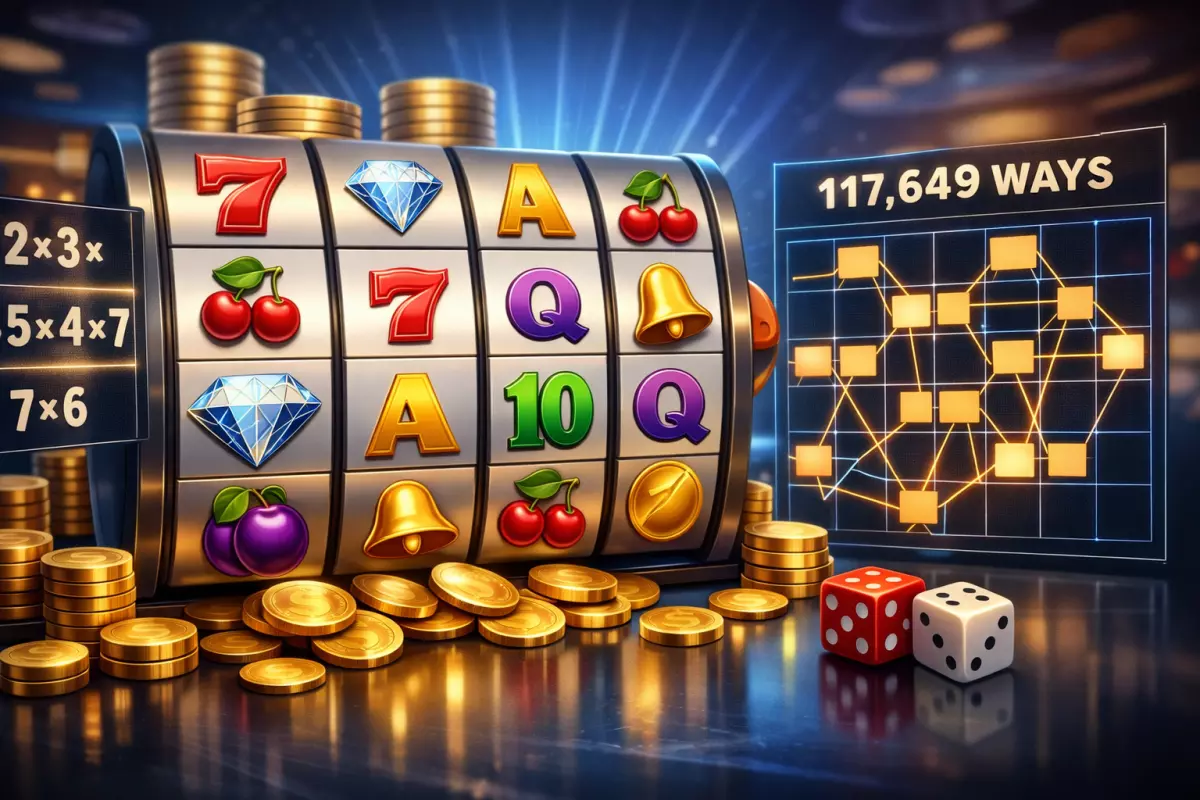 Here we what the Megaways slot system is and who created the mechanic. It explains how dynamic reels change each spin, how paylines and maximum Megaways combinations are calculated, and highlights popular Megaways games. It also sums up key advantages and tips for playing.
If you keep seeing slots advertised with changing reel layouts, this guide explains how the Megaways-style mechanic works in real play. It shows why the number of ways to win can change on every spin, how symbols pay when they land on adjacent reels, and what that means for volatility, hit rate, and bankroll planning before you risk real money.
What the Megaways slot system is
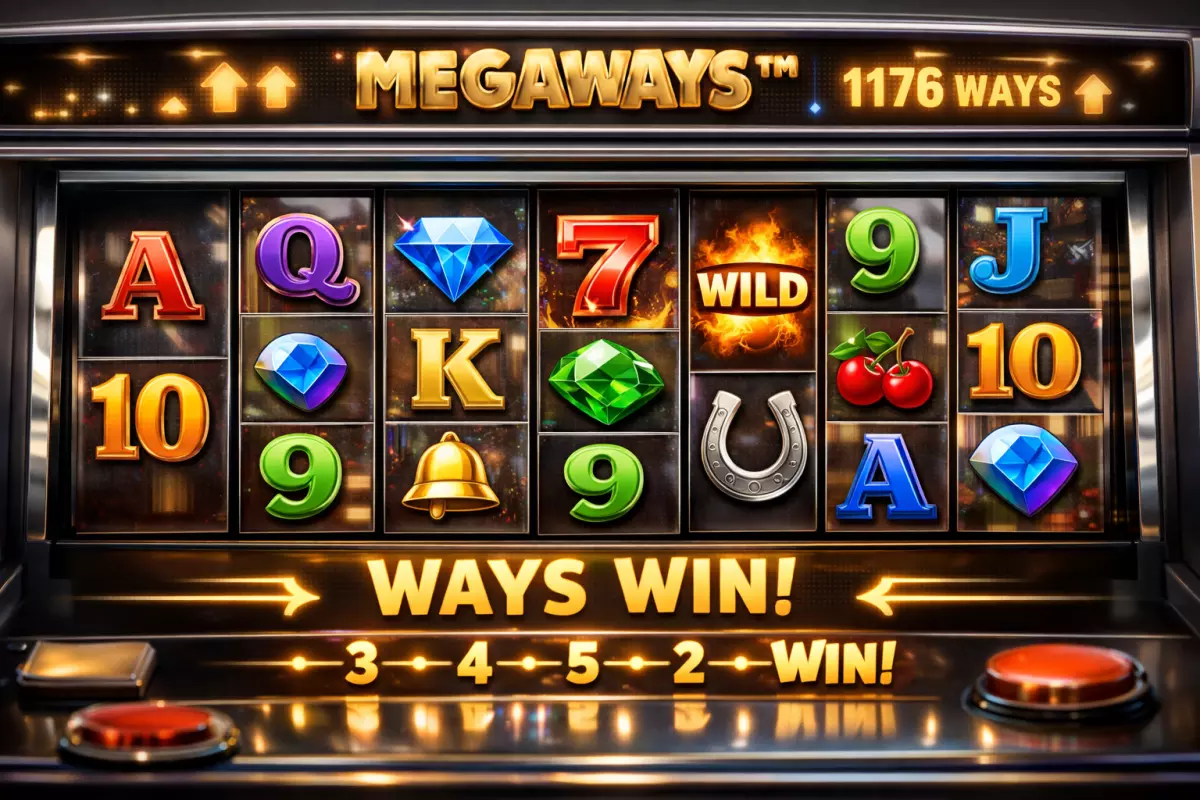
The Megaways mechanic is a variable-reel slot format where the number of symbols on each reel changes on every spin. Instead of a fixed 5x3 grid, you might see a taller or shorter reel stack from one spin to the next. That shifting layout is what creates a different number of possible ways to form winning combinations each time.
In this system, wins are typically evaluated as ways to win rather than traditional paylines. A winning combination forms when matching symbols land on adjacent reels from left to right, usually starting on the first reel. Because each reel can display a different number of symbol positions, the total number of winning routes can range from a few hundred to tens of thousands, depending on the game’s configuration.
How the changing reel layout affects “ways”
Think of each reel as having a random “height” on every spin (for example, 2 to 7 symbols visible). The game then multiplies the number of visible positions across reels to determine how many possible symbol paths exist. More visible symbols generally means more potential routes for matches, but it doesn’t guarantee a win on its own.
- More symbols per reel can increase the number of possible winning routes for that spin.
- Fewer symbols per reel reduces the number of routes, making the grid feel tighter.
- Ways-based evaluation usually removes the need to “hit a specific line,” since matching symbols can connect across many positions.
What stays the same (and what doesn’t)
Even though the layout changes, the core slot principles remain familiar: each spin is random, outcomes are determined by the game’s underlying math model, and payouts depend on symbol values and the game’s paytable rules. What changes is how the game checks for wins and how often the reel window expands or contracts.
It’s also common for these games to include features that interact with the variable grid, such as cascading reels (winning symbols disappear and new ones drop in) or multipliers that build during a sequence. Those features are not mandatory parts of the mechanic, but they frequently appear because they pair naturally with a layout that can generate many winning paths.
Why “Megaways” is often described as high-variance
Many titles built on this format lean toward higher volatility: you may see plenty of small hits due to the large number of routes, while the biggest payouts are typically tied to bonuses, multipliers, or rare symbol setups. The exact experience depends on the individual game’s RTP, volatility settings, and feature design, so two Megaways-style slots can feel very different even if they share the same core reel system.
Who created the Megaways mechanic

The variable-reel “ways” system behind Megaways was created by Big Time Gaming (BTG), an Australian slot studio known for experimenting with reel structures and volatility. BTG developed the mechanic as a way to make each spin feel less predictable by changing the number of symbols on each reel, which in turn changes how many ways to win are available.
BTG first introduced the concept in its own titles, then turned it into a licensable feature so other developers could build games using the same core idea. That licensing move is a big reason the format spread quickly: studios could keep their own themes, maths models, and bonus features while using BTG’s expanding-reels framework.
Big Time Gaming’s role: inventor and licensor
BTG didn’t just popularize a trend; it set up a formal licensing model around the mechanic. In practical terms, that meant other studios could release “Megaways” branded slots legally, while BTG retained ownership of the underlying system. This is why you’ll see many different game makers offering Megaways titles that still share recognizable traits like shifting reel heights and large, fluctuating ways counts.
It’s also why the term is used consistently across the industry: it’s not only a description of gameplay, but a named mechanic associated with BTG’s intellectual property and licensing agreements.
Why the invention mattered to modern slot design
Before this system took off, many video slots relied on fixed reel sizes and a stable number of paylines or ways. By letting reel symbol counts change every spin, BTG introduced a simple structural twist that could dramatically affect hit frequency, win distribution, and how bonus features are tuned. Developers could pair the shifting grid with multipliers, cascading wins, or free spins to create very different experiences, even though the underlying “ways” logic stayed familiar.
In short, Megaways became influential because it offered a reusable foundation: one mechanic that supports many themes and math profiles, while still being instantly recognizable to players who enjoy high-variance, feature-driven gameplay.
How dynamic reels work in Megaways
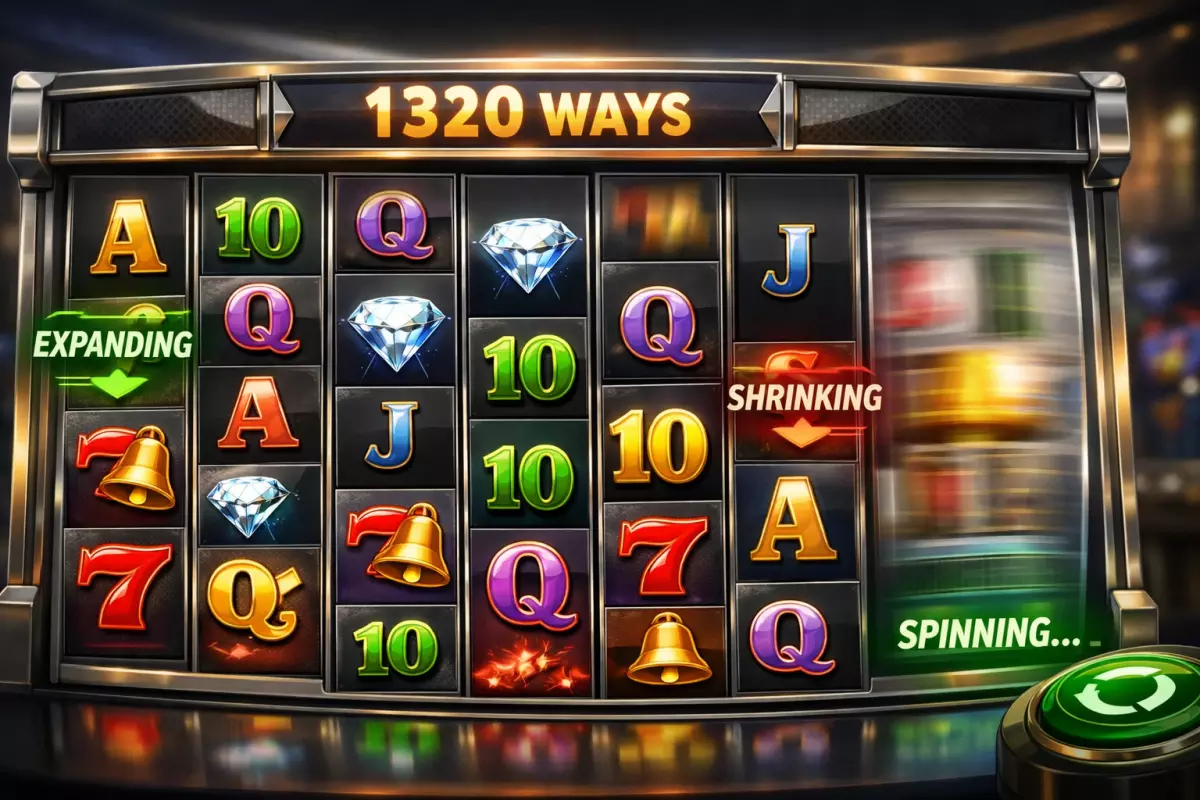
In a Megaways slot, the standout mechanic is that the number of symbol positions on each reel can change from spin to spin. Instead of a fixed 3-row or 4-row grid, each reel “expands” or “shrinks,” which means the total number of possible ways to form a win is recalculated every time you press spin.
This variability is what creates the headline “up to X ways” figure. That maximum only appears when every reel lands on its highest row count. Most spins land somewhere below the cap, so the game is constantly shifting between lower- and higher-way configurations.
What “dynamic reels” actually change
Traditional slots keep reel height constant and only change the symbols. With this system, the reel height itself is part of the random outcome. Each reel can stop with a different number of visible symbols, so one spin might show 2 symbols on reel 1 and 6 on reel 2, while the next spin shows 5 and 3.
Because the reel heights are independent, the grid becomes uneven. That unevenness is normal: it’s not a bonus feature by itself, but the core engine that drives the changing number of win paths.
How the game calculates “ways to win” on each spin
Megaways uses a “ways” model rather than fixed paylines. A win is formed when matching symbols appear on adjacent reels from left to right, and the game counts every possible combination across the visible positions.
On any given spin, the number of ways is found by multiplying the visible symbol counts on each reel. For example, if the reels show 3, 4, 5, 4, 3, and 6 symbols, the total ways for that spin is 3×4×5×4×3×6. The result can change dramatically even if the symbols themselves look similar, simply because the reel heights changed.
- More visible positions usually means more potential combinations.
- Fewer visible positions reduces combinations, even if you land the same symbol set.
- Uneven reels are expected and are part of how volatility is shaped in these games.
Why outcomes can feel “swingy”
Dynamic reel sizes add an extra layer of variance. When the reels expand, you have more routes for matching symbols, which can increase the chance of forming a winning combination. At the same time, more symbol positions also mean more total symbols in view, which can dilute how often any specific symbol lines up across reels.
In practice, this is why Megaways gameplay can alternate between quiet stretches and bursts of activity. The reel configuration influences how many combinations are possible, while the symbol distribution and any modifiers (like multipliers in cascades) determine how valuable those combinations become.
Interaction with cascading wins and modifiers
Many Megaways titles pair variable reels with cascades: winning symbols disappear, new ones drop in, and the reel heights may remain the same for the cascade sequence or be re-evaluated depending on the game’s rules. If the game also increases a win multiplier during consecutive cascades, the dynamic layout can indirectly boost the number of opportunities to keep the chain going.
The key point is that the changing reel heights set the “playing field” for each spin (and sometimes for each cascade), while the symbol results decide whether those extra ways turn into actual wins.
How Megaways paylines are calculated
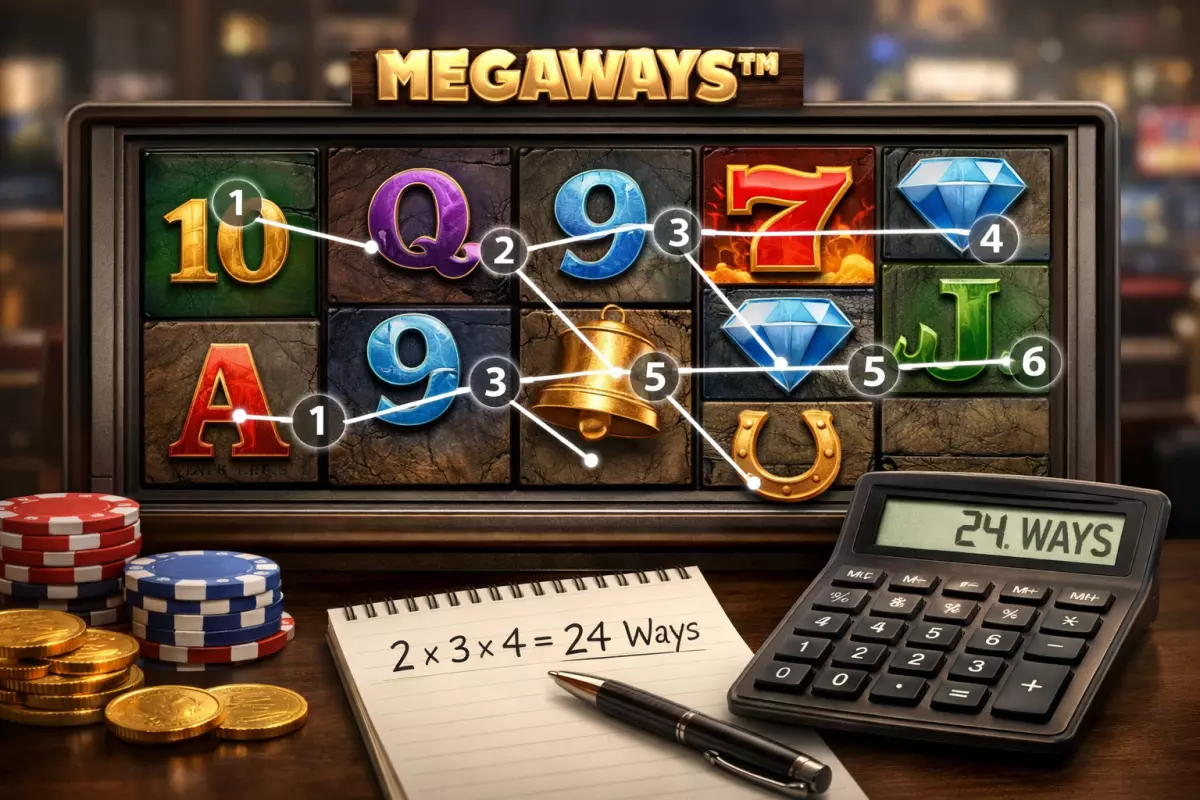
In a Megaways slot, the number of possible winning paths changes on every spin because each reel can show a different count of symbol positions. Instead of fixed paylines (like 10 or 20 straight lines), wins are typically formed by matching symbols from the leftmost reel across consecutive reels, using any position on each reel.
What “ways” actually means
A “way” is one unique route a symbol can take from reel to reel. If reel 1 shows 2 positions, reel 2 shows 3, and reel 3 shows 4, then there are 2 × 3 × 4 = 24 possible routes just across those three reels. Megaways systems extend that multiplication across all reels in the base game (often six), which is why the total can range from a few hundred to well over 100,000 depending on the title.
The core calculation (multiply the visible symbol counts)
The total number of ways on a given spin is calculated by multiplying the number of symbol positions visible on each reel. If the reels show counts R1, R2, R3, …, Rn, then:
Total ways = R1 × R2 × R3 × … × Rn
This figure is not a guarantee of a win; it’s the number of distinct left-to-right paths available for forming winning combinations on that spin.
Worked examples you can picture
Here are a few realistic reel-count setups to show how quickly the total can change:
- Example A: 6 reels showing 2-3-4-3-2-3 positions → 2 × 3 × 4 × 3 × 2 × 3 = 432 ways.
- Example B: 6 reels showing 6-6-6-6-6-6 positions → 6^6 = 46,656 ways.
- Example C: 6 reels showing 7-7-7-7-7-7 positions → 7^6 = 117,649 ways.
How a win is counted across those ways
Most Megaways games pay for matching symbols starting from the first reel and continuing left to right for as many consecutive reels as the paytable requires (often 3+ of a kind, sometimes 2+ for special symbols). Because each reel can contain multiple instances of the same symbol, a single spin can create multiple winning routes for the same symbol.
For instance, if the first reel shows 2 copies of a symbol, the second shows 3, and the third shows 2, then a 3-of-a-kind for that symbol can be formed in 2 × 3 × 2 = 12 different ways, assuming the symbol appears in all those visible positions.
Why the total ways and your payout aren’t the same thing
The “ways” number is a measure of how many potential paths exist, not how many will pay. Your payout depends on (1) which symbols land, (2) how many consecutive reels they connect from the left, and (3) the game’s paytable for that symbol and hit length. Many titles also cap wins per spin, which can limit the final payout even if multiple routes connect.
Extra features that can change the math
Some common mechanics modify the reel counts or the number of routes:
- Expanding symbols: a symbol can fill an entire reel, increasing the number of winning routes for that symbol on that reel.
- Cascades/tumbles: winning symbols disappear and new ones drop in; each cascade recalculates reel counts and available paths for the next evaluation.
- Extra reels or side reels: certain bonuses add reels or change reel heights, which changes the multiplication and therefore the ways total.
The key idea is consistent: each evaluation uses the current reel layout, multiplies the visible positions to get the available routes, and then checks which left-to-right symbol connections qualify for payment.
Maximum Megaways combinations explained
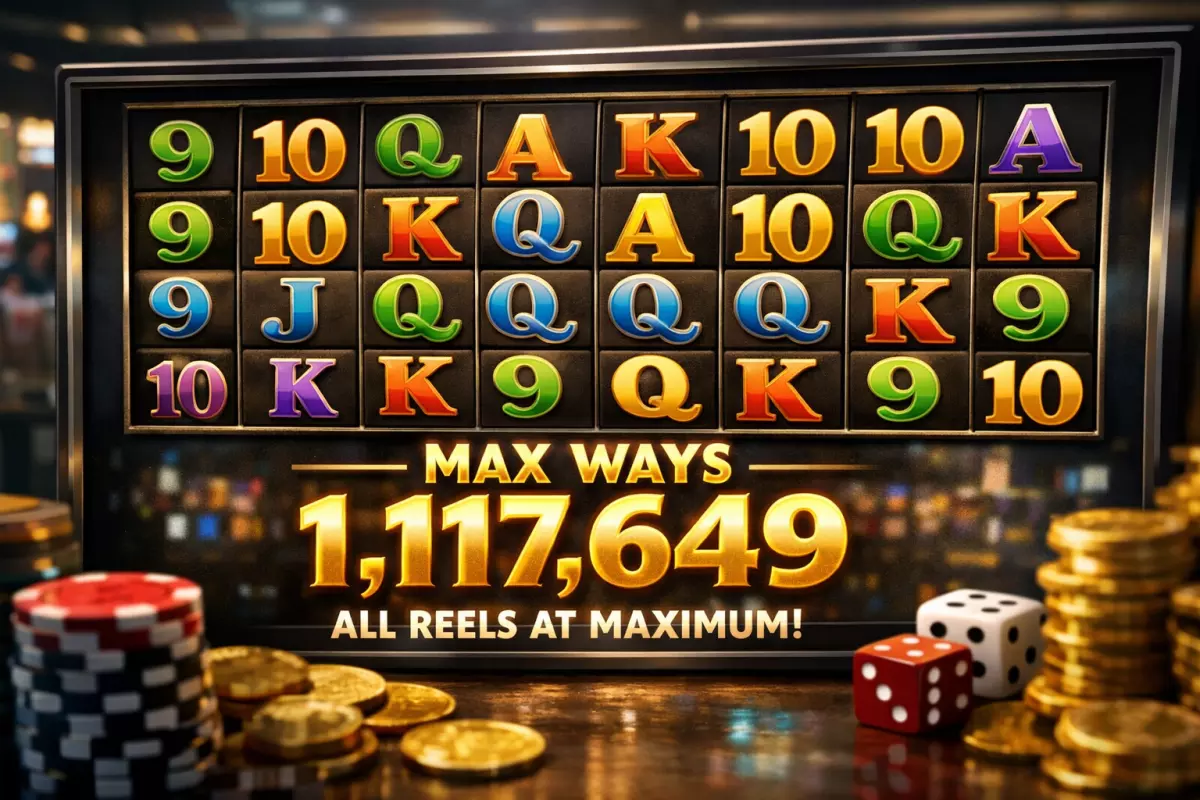
The headline number you see on a Megaways game (for example, 117,649 or 1,048,576) is the maximum possible number of ways to win on a single spin. It’s not a promise that every spin has that many outcomes; it’s the upper limit reached only when every reel shows its highest symbol count at the same time.
In a Megaways slot, each reel can display a variable number of symbols. The total “ways” is calculated by multiplying the number of symbol positions on each reel for that spin. When all reels hit their maximum height, you get the game’s advertised top figure.
How the maximum number is calculated
Think of each reel as offering several “slots” where a matching symbol could land. If reel 1 shows 6 symbols, reel 2 shows 7, and reel 3 shows 5, then the number of win paths through those three reels is 6 × 7 × 5. Extend that multiplication across all reels and you have the total ways for that spin.
So the maximum Megaways combinations is simply the product of each reel’s maximum symbol count. If a game is designed so every reel can show up to 7 symbols and there are 6 reels, the maximum becomes 7 × 7 × 7 × 7 × 7 × 7 = 76 = 117,649 ways.
Concrete examples (why the numbers look so specific)
Many Megaways titles use neat “power” numbers because the reels share the same maximum height. That’s why you often see totals like 117,649 (76) or 1,048,576 (87). Some games add extra mechanics (like a fixed reel, an expanded reel, or a bonus reel) that change the multiplication and produce different maximums.
- 117,649 ways: typically 6 reels with up to 7 symbols each (76).
- 1,048,576 ways: typically 7 reels with up to 8 symbols each (87).
- Non “power” totals: often happen when one reel has a different maximum, or when a feature adds/removes a reel in certain modes.
Maximum vs. actual ways on a given spin
The important nuance is that the number of win paths changes every spin. If one or more reels land below their maximum symbol count, the total ways drops immediately because you’re multiplying smaller numbers. That’s why two consecutive spins can have very different “ways” values even though the game’s maximum stays the same.
This also explains why a higher maximum doesn’t automatically mean more frequent wins. The game’s hit rate and volatility depend on the full math model (symbol distribution, payout table, feature frequency), not only on how large the top Megaways count is.
Where wilds and special symbols fit in
Wilds don’t increase the number of ways by themselves; they usually increase the chance that existing ways become winning ways by substituting for other symbols. Similarly, scatters and bonus triggers typically ignore the “ways” system and pay based on how many appear anywhere, so they’re calculated separately from Megaways combinations.
If a slot includes expanding reels, reel modifiers, or extra reels in free spins, the maximum ways you see in the base game may differ from the maximum in bonus rounds. In those cases, the game is still using the same principle: multiply the visible symbol counts across the active reels for that mode.
Popular Megaways slot games
If you want to understand how the Megaways mechanic feels in practice, it helps to look at a few well-known titles and what they do differently. While the core idea is the same (variable reel heights that change the number of ways to win), each game puts its own spin on features, volatility, and pacing.
Well-known titles and what makes them distinct
Bonanza Megaways is often treated as the reference point for the format. It leans into a “tumble” style where winning symbols disappear and new ones drop in, which can chain multiple wins in a single spin. The free spins mode typically adds multipliers that build as cascades continue, so the excitement comes from sequences rather than single-hit paylines.
Extra Chilli Megaways keeps a similar mining theme but plays a bit differently in how it ramps up. It’s commonly associated with a bonus buy option (where available) and a free spins feature that can feel more “all or nothing,” depending on how multipliers land. Players who like straightforward base-game spins with occasional explosive bonuses often mention this one.
Gonzo’s Quest Megaways adapts a classic slot into the variable-ways framework. It’s a good example of how Megaways can be layered onto an existing identity: the avalanche/cascade mechanic remains central, and the progression of multipliers during feature play is designed to reward extended win chains rather than frequent small hits.
Buffalo Rising Megaways shows how the system works in a more traditional “animal slot” presentation. Instead of relying purely on cascades, it focuses on expanding symbols and feature triggers that can swing results quickly. It’s a useful contrast if you want to compare cascade-heavy Megaways games with ones that feel closer to classic reel slots.
Quick comparison of common Megaways picks
| Game | Core feel | Typical feature focus | Why it’s a useful example |
|---|---|---|---|
| Bonanza Megaways | Cascade-driven, momentum-based | Free spins with growing multipliers | Shows the “classic” Megaways loop of tumbles and multiplier chains |
| Extra Chilli Megaways | Bonus-centric, higher swings | Free spins and (where offered) bonus buy | Good for understanding how volatility can be pushed via feature design |
| Gonzo’s Quest Megaways | Adventure theme with avalanche wins | Multiplier progression during features | Illustrates how a legacy slot can be reworked into variable ways |
| Buffalo Rising Megaways | More “classic reels” pacing | Expanding symbols and bonus triggers | Highlights that not every Megaways title relies on constant cascades |
How to choose a Megaways title that fits your style
Start with the volatility profile you enjoy: many Megaways slots are designed to be swingy, but some feel steadier in the base game than others. If you like long sequences of small-to-medium wins, cascade-heavy designs may suit you; if you prefer waiting for a bigger feature moment, bonus-forward games can feel more satisfying.
Also pay attention to how the bonus works, not just how often it triggers. Two games can share the same Megaways framework yet feel completely different depending on whether multipliers build over time, land randomly, or are tied to specific symbols. That feature structure is usually what determines whether the gameplay feels patient, chaotic, or somewhere in between.
Advantages of Megaways slots
Megaways games stand out because the reel layout changes on every spin, which can turn a quiet session into a streak of high-activity outcomes. Instead of fixed paylines, you get a variable number of ways to win, so the same symbol drop can produce very different results from one spin to the next.
More variety from spin to spin
The core appeal is unpredictability in a controlled, rules-based way. Each reel can show a different number of symbols, so the total win paths fluctuate. That variability makes the gameplay feel less repetitive than classic 10–20 payline slots, especially during longer sessions.
This also changes how you perceive “near-misses” and momentum: a spin with fewer symbols can feel tight and low-action, while a spin with stacked reels can suddenly create a dense grid of potential matches.
Frequent hit potential through “ways” mechanics
Because wins are counted as left-to-right symbol connections across adjacent reels (rather than specific lines), you can land payouts in many more configurations. In practice, this often means you see more small-to-medium wins, even if the overall return is still governed by the game’s RTP and volatility.
Many Megaways titles also add features like cascading reels, where winning symbols disappear and new ones drop in. That can chain multiple wins from a single paid spin, which is a meaningful advantage for players who enjoy extended outcomes without constantly pressing spin.
Feature rounds that can scale quickly
Free spins and bonus modes in Megaways slots are commonly designed to amplify the system’s strengths: expanding reels, extra multipliers, and repeated cascades. When these elements combine, the number of win paths can increase dramatically, which is why these games are often associated with high-ceiling bonus potential.
- Multipliers that climb during cascades or throughout a free spins round.
- Extra reels or expanded rows that increase the number of symbol combinations.
- Additional features such as random modifiers, sticky symbols, or bonus buys (where available and permitted).
Clearer comparison to traditional paylines
If you’re deciding whether the Megaways slot system suits your style, it helps to compare how the win structure differs from fixed-payline games. The table below summarizes the practical differences you’ll notice during play.
| Aspect | Megaways-style slots | Traditional payline slots |
|---|---|---|
| Win structure | Variable “ways to win” based on changing reel heights | Fixed paylines (e.g., 10, 20, 50 lines) |
| Spin-to-spin variety | High; reel size and win paths change constantly | Moderate; layout stays mostly consistent |
| Typical win pattern | Often more frequent smaller hits, depending on volatility | More predictable distribution tied to line structure |
| Bonus round feel | Often built around scaling mechanics (cascades, multipliers, expansion) | Often built around fixed reels with specific bonus triggers |
Good fit for players who like volatility and momentum
Many Megaways slots are tuned toward medium-to-high volatility, meaning outcomes can swing: long stretches of small returns can be punctuated by a strong feature or a high-multiplier cascade. If you enjoy that “momentum” feeling, the format supports it well. If you prefer steadier, more predictable pacing, a classic payline game may feel more comfortable.
Overall, the main strengths come from dynamic reel setups, flexible win counting, and bonus design that can scale rapidly. Just keep in mind that none of these mechanics change the underlying math of the game; they change how the variance is experienced and how often the action ramps up.
Tips for playing Megaways slots
Approach these games like a volatility-driven format rather than a “more ways equals better odds” idea. The changing reel heights mainly affect how many symbol combinations are checked on each spin, not whether the game is inherently more generous. Your edge comes from choosing the right title for your risk level, managing your bankroll, and understanding how features and multipliers actually pay.
Pick the right game for your risk tolerance
Megaways-style slots often lean medium-to-high volatility, but they’re not all the same. Before you commit to a long session, check the game’s RTP (return to player), volatility label (if provided), and the maximum win potential. A high max win frequently comes with longer dry spells, while a lower max win can mean more frequent smaller hits.
If the game offers a demo mode, use it to get a feel for how often it reaches the bonus, how swingy the base game feels, and whether the pace suits you. Demo spins won’t predict real-money outcomes, but they can reveal the game’s rhythm and feature frequency.
Set a bankroll plan that matches the volatility
Because payouts can cluster around bonus rounds and big multiplier moments, it helps to plan for variance. Decide your total session budget first, then pick a stake that lets you survive normal downswings without chasing losses. As a rule of thumb, higher-volatility Megaways games call for smaller bets relative to your bankroll.
- Choose a stake that gives you a comfortable number of spins (not just a handful).
- Set a stop-loss to avoid “one more spin” spirals during cold streaks.
- Set a stop-win so a good run doesn’t turn into giving it all back.
Understand how wins are counted in “ways” games
In this format, a winning combination is typically any matching symbols on adjacent reels from left to right, with multiple instances per reel creating multiple ways to win. That means you can hit several wins on the same spin, but each individual win might be smaller than a classic fixed-payline hit.
Also check whether the game uses a minimum symbol count (often 3, sometimes 4) and how it treats wilds and special symbols. Small rule differences can change how often you see frequent low wins versus rarer larger ones.
Play for features, not just big “ways” numbers
The most meaningful payouts in Megaways slots usually come from feature mechanics: free spins, expanding reels, sticky wilds, and especially multipliers that ramp during cascades. A spin with fewer ways can still pay well if it triggers a sequence of tumbles that builds multipliers.
Pay attention to what actually increases your return: some titles boost multipliers in free spins only, others in the base game too, and some reset multipliers after each cascade chain. Knowing where the upside lives helps you judge whether a session is just variance or a sign the game’s bonus is hard to reach.
Be cautious with bonus buys and extra bets
Many Megaways games offer a bonus buy or an “extra bet” option that increases the chance of triggering free spins. These options can be useful if you understand the cost and the risk, but they also increase volatility and can drain a bankroll quickly. If you use them, treat them as a separate, limited experiment rather than a default setting.
| Option | What it changes | Typical trade-off |
|---|---|---|
| Standard play | Normal feature frequency and payout distribution | More spins for your budget, slower path to bonus rounds |
| Extra bet / feature boost | Raises stake to increase bonus trigger chance (varies by game) | Higher cost per spin, stronger bankroll swings |
| Bonus buy | Directly purchases the bonus feature at a fixed price | High variance concentrated into fewer “all-or-nothing” outcomes |
| Super bonus / enhanced buy (if available) | Buys a stronger version of the bonus or better starting conditions | Even higher price and volatility; bigger upside but harsher downswings |
Use speed and autoplay deliberately
Fast spins and autoplay can make it easier to lose track of spending, especially in games with frequent small hits that feel like “action” but don’t cover the stake. If you use autoplay, set a strict spin limit and loss limit. Slowing down also helps you notice how often multipliers build, how commonly cascades extend, and whether the session is staying within your plan.
Track results realistically
Avoid judging a Megaways slot by a short run of spins. These games can be streaky, and it’s common to see long stretches of modest returns before a feature changes the outcome. If you want a clearer picture, track a longer sample: number of spins, total wagered, biggest win, and how often bonuses triggered. That keeps expectations grounded and helps you decide whether the game fits your style.
Most importantly, treat the shifting reel setup as a presentation of variance, not a promise. If you pick a game with a sensible RTP, keep stakes proportional to your bankroll, and respect stop limits, you’ll get a more controlled experience even in high-volatility Megaways slots.