Pai Gow Poker Rules, Hands and Gameplay Guide

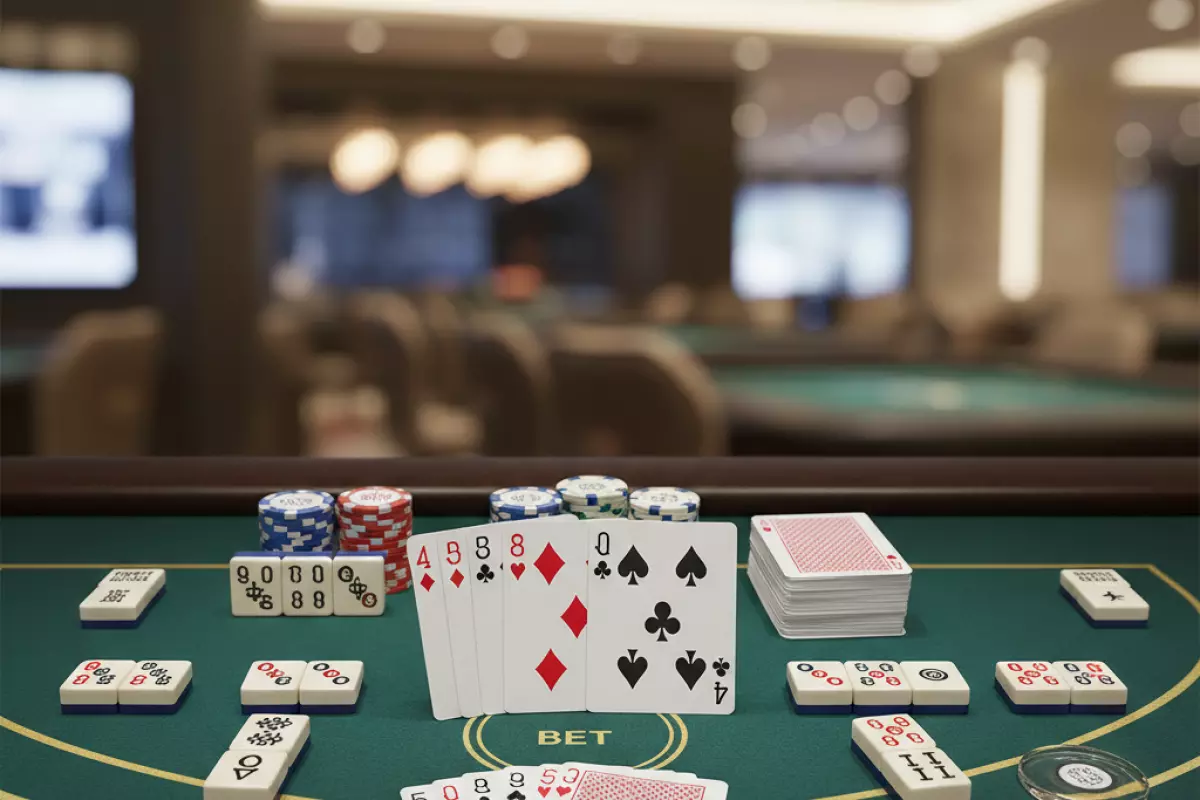 Covers what Pai Gow Poker is and how it works, the table layout, and how to split a seven-card hand into high and low hands. Explains high/low hand rules, the banker role and dealer advantage, odds and house edge, basic strategy tips, and online play.
If you want a low-pressure table game with steady action, learning how Pai Gow Poker works helps you play with confidence. This overview covers the basic rules, how to split your seven cards into a high and low hand, and how rankings compare. You will also learn how dealer qualification works, how pushes happen, and how to handle bonuses and bankroll swings.
What Pai Gow Poker is and how the game works

Pai Gow Poker is a casino table game that blends poker hand rankings with a split-hand format. You’re dealt seven cards and must arrange them into two separate poker hands: a five-card “high” hand and a two-card “low” hand. Your goal is to have both of your hands beat the dealer’s corresponding hands.
It’s usually played with a standard 52-card deck plus one joker. The joker is typically “semi-wild”: it can be used to complete a straight or flush, or it can act as an ace. Because you’re trying to win two comparisons instead of one, the game often results in pushes (ties), which is a big reason it’s considered slower-paced than many other casino poker games.
The basic objective
You win the round by beating the dealer in both the five-card hand and the two-card hand. If you win one hand but lose the other, the result is a push and your bet is returned (house rules can vary slightly, but this is the standard outcome). If both of your hands lose, you lose the wager.
A key rule shapes every decision: your five-card hand must rank higher than your two-card hand. If you set your hands incorrectly (for example, you put a pair in the two-card hand while leaving only high card in the five-card hand), it’s a “foul” hand and it loses automatically.
How a round plays out
Each player places a bet, then receives seven cards face up or face down depending on the casino. The dealer also receives seven cards and sets a hand according to the house way (a fixed set of rules the dealer must follow). Players set their own hands, then all hands are compared.
- Place your wager (and optionally a side bet if offered).
- Receive seven cards and review your best possible combinations.
- Split into two hands: a five-card hand and a two-card hand, keeping the five-card hand higher.
- Dealer sets their hand using the house way.
- Compare hands (five-card vs five-card, two-card vs two-card) to determine win, loss, or push.
Comparing hands: win, lose, or push
Both of your hands are evaluated using standard poker rankings, with one important limitation: the two-card hand can only be high card or one pair (no straights/flushes because it’s only two cards). The dealer’s two-card hand follows the same restriction.
- You win if your five-card hand beats the dealer’s five-card hand and your two-card hand beats the dealer’s two-card hand.
- You lose if both of your hands lose to the dealer’s hands.
- Push if you win one hand and lose the other.
- Ties are typically treated as dealer wins on that hand (for example, if your five-card hand ties the dealer’s five-card hand, that comparison is scored as a loss for you).
Why the split-hand format matters
Most of the strategy comes from deciding how much strength to “spend” on the two-card hand without weakening the five-card hand too much. For example, you might have two pairs and a high kicker in seven cards; you’ll often put the higher pair in the five-card hand and the lower pair in the two-card hand, but sometimes the best split depends on how it affects your five-card hand’s ability to beat the dealer.
Because pushes are common, bankroll swings tend to be smaller than in games where every hand is a full win or full loss. That doesn’t make it risk-free, but it does explain why many players treat it as a steadier, decision-focused table game.
Pai Gow Poker table layout and setup

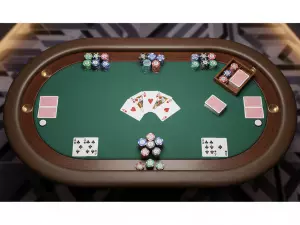
The game is dealt on a semi-circular felt with marked betting areas for each seat and a dedicated spot for the dealer’s hand. Most casinos use a standard 52-card deck plus one joker, and the dealer position is fixed (the “bank” may rotate by house rules, but the dealer still runs the procedure).
You’ll usually find 6 or 7 player positions around the table. Each position has a betting circle (where you place your wager) and a clear area in front of you for arranging your cards into a 5-card “high” hand and a 2-card “low” hand. The dealer’s layout includes a space to set the house hand and a rack or tray for chips.
What’s on the felt
The printed layout is there to keep hands and bets organized. While designs vary, the same functional zones show up in most rooms: a wager spot, a working area for your two hands, and a dealer zone where the house sets and reveals its cards.
- Betting circle for your main wager (placed before the deal).
- Player hand area where you separate your seven cards into two hands.
- Dealer hand area where the house sets its 5-card and 2-card hands.
- Chip rack and drop box used by the dealer for payouts and security.
Cards, joker, and how they’re handled
Pai Gow Poker is typically dealt from a shoe or by hand from a single deck, depending on the casino. The joker is not fully wild: it can be used as an ace, or to complete a straight, flush, or straight flush. If it can’t improve a hand in those ways, it plays as an ace.
After the deal, players set their hands privately at their spot. In many casinos you can ask the dealer to “set it house way,” meaning the dealer will arrange your two hands according to the casino’s preset rules. This is helpful when you’re learning, but it also means you’re accepting the house’s default strategy.
How a round is physically set up
From a table-operations standpoint, each round follows a consistent flow so cards don’t get mixed and hands stay clearly separated. Expect the dealer to control the pace and tell you when to set your hand and when to expose it.
- Place your wager in the betting circle before cards are dealt.
- Receive seven cards (face down in most live games).
- Arrange the cards into a 5-card high hand and a 2-card low hand in front of you.
- Set the two hands down clearly separated (often with the low hand closest to you and the high hand above it, depending on house procedure).
- Turn both hands face up when the dealer instructs, then the dealer compares them to the house hand.
Seat positions and banking notes
Some tables allow a player to act as the banker on a rotating basis. When banking is offered, the layout doesn’t change, but the responsibility does: the banker’s position (player or house) sets a seven-card hand and compares against opponents, paying winners and collecting from losers. If you’re not banking, you simply play your hand against the dealer’s hand as normal.
Because the game is played as two hands versus two hands, the physical separation on the felt matters. Keeping your 2-card hand and 5-card hand clearly distinct helps avoid misreads, accidental fouls, or confusion when the dealer resolves outcomes.
Seven card hand and two hand split
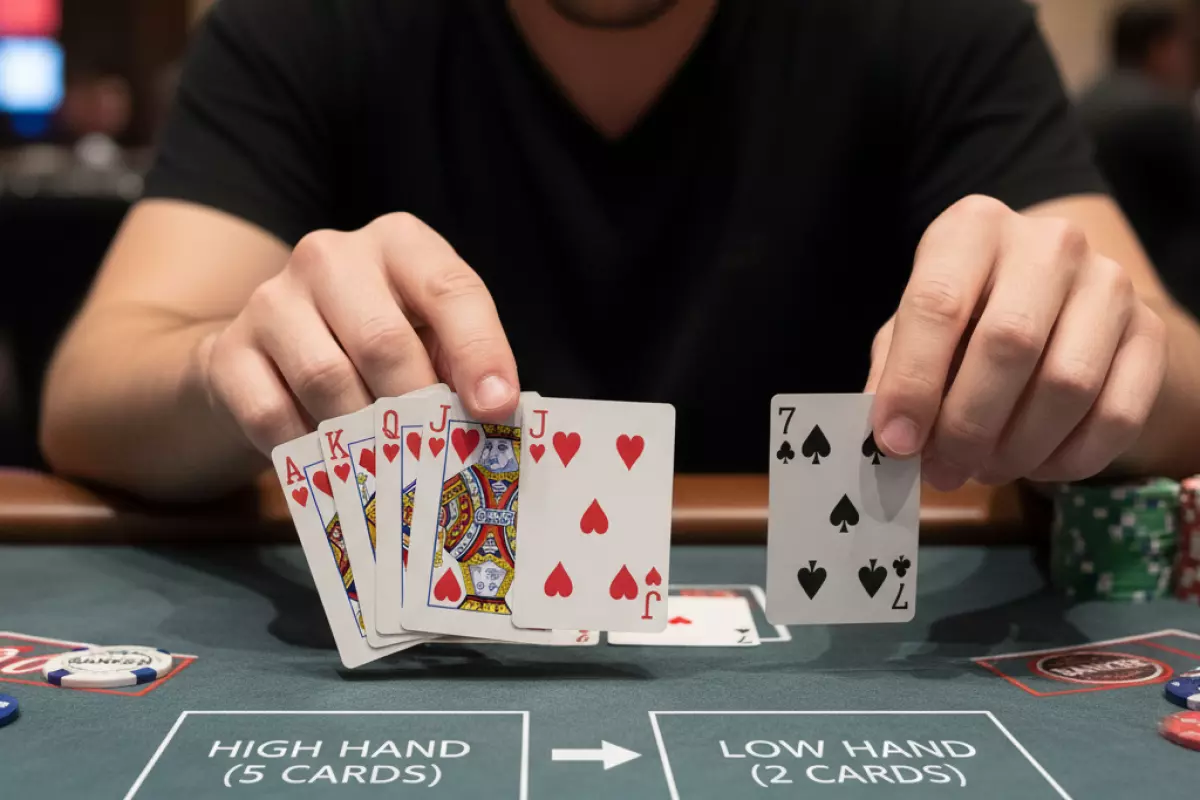
In Pai Gow Poker you receive seven cards and must arrange them into two poker hands: a five-card high hand and a two-card low hand. The goal is to set both hands so they can beat the dealer’s corresponding hands, while still following the key rule that the five-card hand must rank higher than (or at least not lower than) the two-card hand.
This split is the core decision of the game. A small change in how you arrange one card can turn a likely push into a win, or accidentally create an invalid set that automatically loses.
What the two hands are
Your high hand uses five cards and is evaluated using standard poker rankings (high card through royal flush). Your low hand uses two cards and is evaluated as a two-card poker hand: it can only be a pair or high card, with ties broken by the highest card(s).
The dealer also sets a five-card and two-card hand from their seven cards, then your hands are compared position-by-position: high vs. high, low vs. low.
The “house way” rule and why it matters
Most casinos and online games follow a predefined setting method called the house way for the dealer hand. Players are usually free to set their own split, but you must keep it legal: the five-card hand cannot be weaker than the two-card hand.
If you’re unsure how to arrange your cards, many tables allow you to ask the dealer to set your hand using the house way as well. It’s not always the most aggressive option, but it prevents common mistakes and keeps your hand valid.
How to split your seven cards (practical checklist)
When you look at your seven cards, start by identifying the best five-card poker combination available, then decide whether it’s worth “breaking” that combination to strengthen the two-card hand or to avoid leaving the low hand too weak.
- Confirm legality first: make sure your five-card hand ranks at least as high as your two-card hand.
- Protect the low hand when it’s close: a small pair in the two-card hand can be valuable, but don’t create a five-card hand that becomes too weak.
- Don’t overvalue a tiny improvement: moving a medium kicker to the low hand may not help if it turns your high hand into a marginal high-card hand.
- Watch for “accidental” two-card strength: if your two-card hand becomes a pair, your five-card hand must be at least a pair too.
- Aim for two wins, accept pushes: many rounds end in a split result (one hand wins, one loses), which is a push in most rule sets.
Common split patterns (and what to avoid)
Some layouts come up frequently. For example, when you have one clear made hand (like a straight or flush) plus two unrelated cards, it’s usually straightforward: keep the made hand as the five-card hand and place the two leftovers as the low hand. The tricky spots are hands with multiple pairs, full-house possibilities, or when improving the two-card hand requires breaking a strong five-card combination.
A frequent error is creating an invalid set by placing a pair in the two-card hand while leaving only high card in the five-card hand. Another mistake is chasing a slightly better low hand by weakening the high hand so much that it loses more often than the low hand gains.
How the comparisons decide the outcome
After both you and the dealer have set your two hands, the results are determined by comparing each hand separately:
- If you win both the five-card and two-card comparisons, you win the round.
- If you lose both, you lose the round.
- If you win one and lose one, it’s typically a push.
- If one hand ties and the other wins or loses, the non-tied hand usually decides the outcome; if both tie, it’s a push.
Because the split drives these two separate matchups, good setting is less about building one “best” poker hand and more about balancing strength across both hands without violating the ranking order.
High hand and low hand rules

In Pai Gow Poker, you split your seven cards into two separate poker hands: a five-card hand (the “high” hand) and a two-card hand (the “low” hand). The key requirement is simple: the five-card hand must rank higher than the two-card hand, otherwise the set is a foul and usually loses automatically.
What counts as a valid split
A correct arrangement always respects the ranking order between the two hands. Your five-card hand uses standard poker rankings (from high card up to royal flush), while the two-card hand is judged only as a pair or high card because it contains just two cards.
- High hand: exactly 5 cards, evaluated with normal poker hand rankings.
- Low hand: exactly 2 cards, evaluated as either a pair or high card (no straights/flushes as separate categories).
- Rule to remember: the five-card hand must beat the two-card hand in rank.
How the low (two-card) hand is ranked
The two-card hand is straightforward: a pair beats any two unpaired cards, and otherwise it is compared by high card. When comparing two unpaired low hands, the highest card wins; if those tie, compare the second card.
Example: A♠ 9♦ beats K♣ Q♥ in the low hand because Ace-high beats King-high. A pair like 7♠ 7♦ beats any Ace-high non-pair.
How comparisons work against the dealer
After you set both hands, the dealer sets a high and low hand as well. Each of your hands is compared to the corresponding dealer hand:
- If you win both the five-card and two-card comparisons, you win the wager.
- If you lose both, you lose the wager.
- If you win one and lose one, it’s a push (tie) in most house rules.
Ties are typically treated as dealer wins for that specific hand comparison (for example, if your high hand ties the dealer’s high hand, the dealer “wins” the high-hand comparison). This matters because it can turn what looks like a split result into a dealer win on one side.
Common fouls and avoidable mistakes
The most frequent error is accidentally making the two-card hand stronger than the five-card hand. This can happen when you put a pair in the low hand and leave the high hand as only high card, or when you overlook that your five-card hand could be improved without weakening it below your low hand.
- Putting a pair in the low hand while the five-card hand is only high card.
- Breaking a strong five-card hand (like a straight or flush) in a way that leaves the high hand too weak.
- Misreading the two-card hand: remembering it can only be “pair” or “high card,” not a straight/flush.
Practical examples of legal vs. illegal sets
Legal: High hand = K♠ K♦ 9♣ 6♥ 3♦ (pair of kings); Low hand = A♣ J♣ (Ace-high). The five-card hand (pair) outranks the two-card hand (high card).
Foul: High hand = A♠ Q♦ 10♣ 8♥ 4♦ (high card); Low hand = 9♠ 9♦ (pair of nines). The low hand (pair) outranks the high hand (high card), so the set is invalid.
Edge case: If you have two pairs available, you can often place the higher pair in the five-card hand and the lower pair in the two-card hand, as long as the five-card hand still ranks above the low hand (for example, high hand = two pair, low hand = one pair is always safe).
Banker role and dealer advantage

In Pai Gow Poker, the most important structural detail is who acts as the bank. The bank sets the two hands first, compares against each player, and benefits from the game’s “push” rule when hands split.
What the banker does
The banker role is simple: after receiving and arranging a seven-card hand into a five-card “high” hand and a two-card “low” hand, the bank’s two hands are compared separately to each player’s two hands. A player must win both comparisons to win the wager; otherwise the outcome is either a loss or a push.
Most casinos have the dealer act as banker by default, but many tables also allow a player to bank (either by choice, rotation, or by meeting a minimum bet requirement). When a player banks, that player is effectively taking the dealer’s position for that hand, settling against the other players one by one.
Why the bank has an edge
The built-in advantage comes from how ties are handled. If one of your hands beats the bank and the other loses, the result is a push (no win, no loss). That sounds neutral, but it favors the bank because the bank wins whenever it takes at least one hand and ties are typically treated as wins for the banker (house rules vary slightly, but this is common in casino Pai Gow Poker).
In practice, this means the non-banking player needs a clean 2–0 result to get paid, while the banker benefits from 1–1 splits and many tie situations. This is the core dealer advantage in Pai Gow Poker, more than any single “strategy trick.”
Dealer setting rules and how they affect you
When the dealer is the bank, the dealer usually sets hands according to a fixed “house way.” This removes discretion and keeps the game consistent, but it can also create outcomes that differ from how an experienced player might set the same seven cards.
When you are not banking, you typically have freedom to set your own two hands (as long as the five-card hand is always ranked higher than the two-card hand). If you set your hands incorrectly (for example, the two-card hand outranks the five-card hand), it is a foul and usually loses automatically.
Player banking: when it’s allowed and what changes
If the table allows a player to act as the bank, you gain the same structural advantage the dealer normally has, but you also take on the responsibility of paying winners and collecting from losers. Casinos often require the player-banker to cover the maximum possible action (sometimes called “bankroll” requirements) so that all bets can be paid.
- Upside: you get the tie/push dynamics that favor the bank, and you may reduce the impact of a dealer commission depending on the rules.
- Trade-off: variance can increase because you are effectively playing against multiple hands, and you must be comfortable covering swings.
- Practical note: some casinos still charge a commission on banker wins (commonly 5%), while others use alternative payout rules to replace the commission.
Commission and house edge (the quick explanation)
Many Pai Gow Poker games charge a small commission on winning hands when the dealer banks, which is one reason the house maintains an edge even though pushes are frequent. If player banking is offered, the commission and eligibility rules determine whether banking is attractive in the long run.
The takeaway is straightforward: the dealer advantage mainly comes from being the bank, not from “better cards.” If you can legally bank and you understand the settlement rules at your table, you can sometimes shift that edge in your favor—while accepting the added volatility that comes with it.
Pai Gow Poker odds and house edge
The math in this game is shaped by two things: you must win both hands (high and low) to get paid, and ties are common because the dealer uses the same hand-ranking rules. That combination makes results feel “swingy” in the short run, but it also keeps the game’s volatility relatively low compared with many other table games.
From an odds perspective, the most important concept is the push. If you win one hand and lose the other, the round is a push and your main wager is returned. If you tie one hand and win the other, you usually win; if you tie one hand and lose the other, you usually lose; and if both hands tie, it’s a push. Because so many hands land in the middle, your bankroll tends to last longer, but the casino’s advantage is still there over time.
How the house edge is created
The casino’s built-in edge mainly comes from the dealer’s “copy” rule: if the dealer and player have identical two-hand outcomes, the dealer wins (or, in some rule sets, ties go to the house on specific hands). Even when everything else is fair, that tie-breaking rule nudges the long-term expectation in the house’s favor.
Most casinos also charge a commission on winning bets (commonly 5%), which further increases the effective cost of playing. Some tables replace commission with a “no commission” paytable that reduces payouts on certain wins; either way, the value is taken out through the rules rather than through card manipulation.
Typical house edge ranges (what to expect)
The exact edge depends on the table rules (commission vs. no-commission), how the dealer sets their hand, and how well you set yours. With solid, standard setting strategy, the main wager is usually in a low single-digit house edge range, and the game remains relatively low volatility because pushes are frequent.
| Game condition | What changes | Effect on your long-run return |
|---|---|---|
| Commission table (e.g., 5% on wins) | You pay a fee only when you win | Lower payout efficiency; the fee acts like a steady drag on results |
| No-commission variant | No fee, but some winning outcomes pay less (or push) | Edge is “built into” reduced payouts; can be better or worse depending on the paytable |
| Good hand-setting (following common guidelines) | You avoid breaking strong highs unnecessarily and protect the low hand | Improves expected value versus random or inconsistent setting |
| Poor hand-setting | You over-strengthen one hand and sacrifice the other too often | More split losses and fewer full wins; the effective house edge increases |
Why pushes matter to the odds
In many casino games, every hand ends in a win or loss. Here, a large share of rounds end as pushes because splitting a seven-card hand into two hands creates many “one up, one down” outcomes. That means your win rate can look modest even in sessions where you don’t lose much, because lots of hands simply return your bet.
This also explains why bankroll swings often feel smoother: fewer decisions resolve as full losses, and ties are more frequent than in standard poker formats. The trade-off is that the casino’s advantage is realized gradually through tie rules and fees, not through dramatic losing streaks.
Betting choices that change the effective edge
The base wager is usually the most predictable in terms of value. Side bets (if offered) often have higher house edges because they pay for rare events like specific poker hands. They can be fun, but they typically increase the cost per hour because they resolve as win/lose more often than the main bet and don’t benefit from the same push frequency.
- Main wager: Lower variance, many pushes, value depends on commission/paytable and your setting decisions.
- Side bets: Higher variance, fewer pushes, usually a larger built-in house advantage.
Practical ways to reduce the house edge (within the rules)
You can’t remove the casino advantage, but you can avoid making it worse. The biggest lever you control is how you set your two hands. Using a consistent approach that balances the high hand’s strength with a “defensible” low hand reduces the number of rounds where you win one hand but give away the other.
If you have a choice between tables, compare the commission structure or no-commission paytable and pick the one with the most player-friendly terms. Small rule differences matter more here than people expect because the game’s baseline swings are already dampened by pushes.
Common Pai Gow Poker strategy tips
Play this game with a “risk-control” mindset: you’re trying to win one hand and avoid losing both, not chase big payoffs every round. Because pushes are common, small improvements in how you set your two hands can matter more than aggressive betting.
Set your hands to avoid the common mistake: overloading the high hand
The fastest way to donate value is to build a very strong 5-card hand and leave the 2-card hand too weak to compete. In Pai Gow Poker you need to win both hands to win the wager, so a lopsided split often turns potential wins into pushes or losses.
As a baseline, aim for a 2-card hand that can at least tie or beat the dealer’s low hand sometimes (often a pair, or at minimum a solid high-card like A-K). If strengthening the low hand costs only a little from the 5-card hand, it’s usually worth it.
Use “push-first” logic when your hand is marginal
When your 7 cards don’t support two competitive hands, prioritize setting a configuration that maximizes your chance to win one hand and push the other. This reduces the frequency of losing both hands, which is the most damaging outcome over time.
Know the key split decisions (pairs and two-pair)
Pair-hand decisions drive most of the strategy. With one pair, you’ll often keep the pair in the 5-card hand and put your two highest remaining cards in the 2-card hand. With two pair, many players do better by splitting: one pair in front, one pair in back, especially when the remaining kicker doesn’t meaningfully strengthen the 5-card hand.
Be careful with “pretty” 5-card builds that leave something like 9-4 in front; that front hand will lose too often against the dealer’s typical two-card holding.
Handle three of a kind and full-house-type holdings carefully
With three of a kind, the main choice is whether to keep trips together in the 5-card hand or break it to create a pair in the 2-card hand. Breaking can be correct when it significantly improves the front hand without collapsing the back hand’s ability to compete.
With a full house, players commonly keep the full house as the 5-card hand and place the two highest side cards (if any) in front. If your 7 cards include extra strength that can form a strong 2-card pair without turning the 5-card hand into something fragile, consider that split, but avoid violating the rule that the 5-card hand must remain higher than the 2-card hand.
Respect the “house way” and use it as a practical guide
Casinos often publish or follow a house way (a fixed method for setting hands). Even if you don’t memorize it, you can use it as a sanity check: if your split is wildly different, pause and re-evaluate whether you’re sacrificing too much equity for one hand.
Banking: when it helps and what to watch for
If the rules allow players to bank, it can improve your long-run expectation because the banker wins ties. However, banking also increases variance and can require a larger bankroll to handle swings. Only bank when you understand the table’s procedure (how the deal and commission work, and whether banking rotates).
Bet sizing and side bets: keep them separate from the base game
Flat betting is usually the most sensible approach because outcomes are slow-moving and pushes are frequent. If you play side bets, treat them as a separate, higher-volatility choice; they don’t change the correct way to set your two hands, and they can dominate your results with short-term swings.
- Base bet: keep sizing steady unless your bankroll plan says otherwise.
- Side bets: use small amounts you’re comfortable losing; don’t “recover” with bigger side wagers.
Quick self-check before you set your hand
A simple checklist prevents most avoidable errors and speeds up decision-making at the table.
- Is your 5-card hand definitely higher than your 2-card hand?
- Does your 2-card hand have realistic win/tie potential (pair, A-high with strong kicker, etc.)?
- Did you accidentally break a strong 5-card hand for a tiny gain in front?
- Are you aiming for “win one, push one” when the cards don’t support winning both?
Playing Pai Gow Poker online
Digital tables make this game easier to learn because the interface handles shuffling, dealing, and most payouts automatically. Your main job is still the same as in a casino: split seven cards into a five-card “high” hand and a two-card “low” hand, with the five-card hand ranking higher than the two-card hand.
How the online flow differs from a live table
Most sites guide you through each round with prompts and timers. After you place a bet, you’ll receive seven cards and either set your hands manually or use an auto-set option. Once you confirm, the dealer’s hand is revealed and the software compares your two hands against the dealer’s two hands to decide the result.
Because the dealing is automated, rounds usually move faster than in-person play. If you prefer a slower pace, look for tables with longer decision timers or lower player counts, so you’re not rushed when arranging your hands.
Setting your hand with on-screen tools
The key decision online is how you split borderline holdings. Many interfaces let you drag-and-drop cards, tap to assign them, or use quick buttons to move cards between the two hands. Take a moment to confirm that your five-card hand is truly stronger than your two-card hand; an invalid split can be rejected or auto-corrected depending on the platform.
Auto-set can be useful when you’re new, but it may not match your risk preference. For example, a conservative auto-set might protect the two-card hand more than you’d like, while you may prefer to strengthen the five-card hand to increase chances of winning both hands.
Common rule settings you’ll see online
Before you sit down, check the table rules shown in the game info panel. Small variations change expected outcomes, especially around ties and fees. Many online games charge a commission on winning hands, while others use a “banker” style fee or a slightly different payout structure.
| Rule/feature | What it means for your session | What to look for in the table info |
|---|---|---|
| Commission vs. no-commission | Commission reduces net wins; no-commission versions may adjust payouts or push rules to compensate. | “5% commission on wins” or “no commission” wording, plus any listed payout adjustments. |
| Dealer wins ties (copy) | If your hand ties the dealer’s hand, the house may take the win on that hand, increasing the house edge. | “Dealer wins ties” or “ties push” for each hand comparison. |
| Joker usage | The joker is typically a limited wild card (often for straights/flushes) and can change optimal splits. | Exact joker rules: fully wild or restricted, and how it can be used in each hand. |
| Banking option | Some games let players act as the banker; this can change variance and strategy considerations. | “Player banks” availability, rotation rules, and any extra requirements or limits. |
Practical tips for smoother online play
Start by choosing stakes that give you time to think. Pai Gow Poker has frequent pushes, so bankroll swings can feel slower than many table games, but you can still hit streaks when you repeatedly win or lose both hands.
- Use the “replay” or hand history (if available) to review how your split performed against the dealer.
- Watch the timer and pre-plan your split when you see obvious structures (pairs, two pair, trips).
- Confirm hand validity before locking in: five-card hand must outrank the two-card hand.
- Be consistent with your approach (protecting the low hand vs. maximizing the high hand) so results are easier to evaluate.
If you’re learning, consider playing a few rounds using auto-set, then switching to manual and comparing outcomes. Over time you’ll spot the recurring decisions—especially with two pair, three of a kind, and hands involving the joker—where your chosen split matters most.